Marketplace
- Document
Efficient Sampling Methodology for Calculating Soil Carbon Credits.
Sustainable Forest Management enhances carbon storage in various forest compartments (soil, biomass, and necromass), increases ecosystem services and forest productivity, mitigates climate change, and supports the local rural economy.
- Paper
What are Nature-based solutions (NbS)? Setting core ideas for concept clarification
Although nature-based solutions (NbS) have been promoted as a key tool for solving diverse environmental and societal problems, the concept and its practical applications remain unclear. This ambiguity is linked to the fact that the NbS concept has emerged from the integration of multiple
- Event
Bauhaus Prizes 2021
The New European Bauhaus has the ambition to make the Green Deal a cultural, human-centred and positive, tangible experience. Everyone should be able to feel, see and experience the green and digital transformation and the way it enhances our quality of life. It is about bridging the global
- Report
Knowledge Transfer between Front Runner and Fast Follower Cities
This document provides a detailed overview of knowledge transfer activities between the FRCs and FFCs. The report will also outline some key innovations and next steps – including (a) the collaborative approach undertaken across WPs as part of the ELF in the design and delivery of Knowledge
- Document
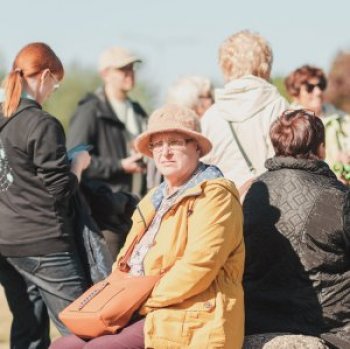
Stakeholder Engagement Guide - Nature Based Solutions in Cities
What is this guide? Guidance and a set of tools to establish a strong and consistent foundation for outreach and engagement when undertaking City projects in Nature Based Solutions, Regeneration, Housing etc. Who is it for? Any City Official carrying out a natural or built environment project that

- Empty
Visionary and integrated solutions to improve well-being and health in cities: Clustering Activities - Joint Manifesto
Report The following is a joint manifesto from four sister projects which calls on European cities to launch initiatives that offer visionary and integrated solutions at the intersection of social, cultural, digital and nature-based solutions (NBS) to increase the health and well-being of
- Guidance
Urban Climate Comfort Zones
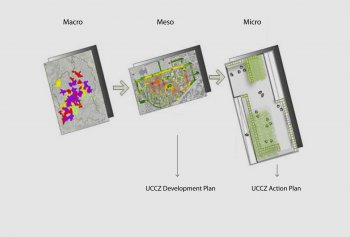
Guidelines for tackling heat island effects of urban open spaces, identifying prior areas of concern and proposing measures to enhance thermal comfort, micro-climate, amenity value and biodiversity in urban regions (with strategically distributed green spaces).
- Document
- Guidance
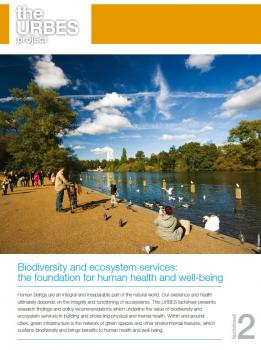
Biodiversity and ecosystem services: the foundation for human health and well-being - URBES Factsheet #2
Human beings are an integral and inseparable part of the natural world. Our existence and health ultimately depends on the integrity and functioning of ecosystems. This URBES factsheet presents research findings and policy recommendations which underline the value of biodiversity and ecosystem

- Video
Video: Unveiling of new edible garden in South Thamesmead, London
With the help of input and design ideas from local residents, CLEVER City London, alongside Peabody and its appointed design partner, muf architecture/art, has successfully delivered its first Nature-based Solution: an edible garden in South Thamesmead. To celebrate, the CLEVER Cities team
- Report
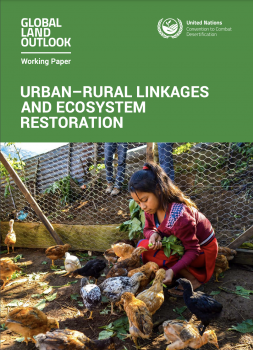
UNCCD Urban-rural linkages and ecosystem restoration
This working paper from the UN proposes an urban-rural linkage perspective in relation to land and ecosystem restoration at a time of heightened urgency on multiple fronts at local, national and international levels. The combined impacts of climate change, biodiversity loss land degradation, and
- Document
- Guidance
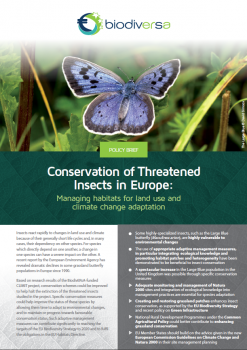
Conservation of threatened insects in Europe
The "Conservation of threatened insects in Europe" policy brief is focusing on the conservation of threathened and vulnerable insects in the context of changing land use and climate. This brief builds on the BiodivERsA-funded CLIMIT project, lead by Dr. Josef Settele. The brief gives
- Empty
Green space and mortality in European cities: a health impact assessment study / The Lancet Planetary Health
Natural outdoor environments including green spaces play an important role in preserving population health and wellbeing in cities, but the number of deaths that could be prevented by increasing green space in European cities is not known. This study aimed to estimate the number of natural-cause
- Document
- Training
Method Factsheet - Species Distribution Models
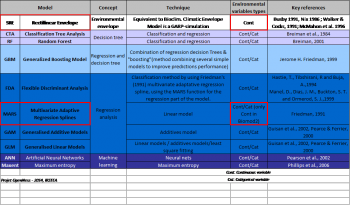
Species distribution models (SDMs) (Franklin, 2009) have shown great potential in helping to achieve conservation planning goals by refining our knowledge of species distributions (Jetz et al., 2012). SDMs extrapolate species distribution data in space and time, usually based on a statistical
- Consultancy
- Software
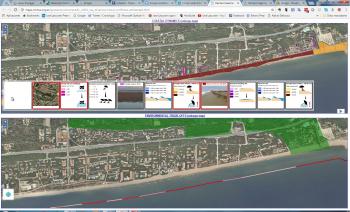
Map viewer (Web Map Service)
Share your georeferenced contents with this map visualization tool

- Document
- Guidance
OpenNESS Synthesis paper: Indicators for ecosystem services
An indicator is a quantitative measure which represents a complex system or phenomenon. Indicators are key elements in policies for goal formulation and evaluation of achievements, as well as simplification of information and communication. There is a long tradition of applying indicators in a
- Document
- Guidance
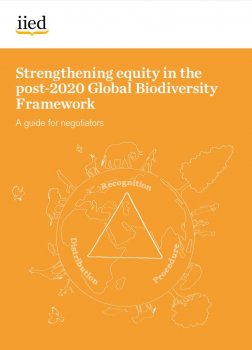
Strengthening equity in the post-2020 Global Biodiversity Framework: a guide for negotiators
The post-2020 Global Biodiversity Framework (GBF) will be a major milestone in global agreements on biodiversity conservation, setting international ambition for the next decade. This guide is intended to support Parties to the Convention on Biological Diversity (CBD) who wish to see strengthened
- Document
Enhancing Additionality Assessment of Carbon Credit of Various Interventions by Utilizing Site-Specific Historical Data in Compliance with IPCC International Standards
In carbon credit additionality projects, precise quantification methods are crucial to prevent incorrect estimations. The project activities and results demonstrated that active forest management generates additionality and, consequently, carbon credits.
- Guidance
Guidance on Co-creating NbS CLEVER Cities
This guidance contains a toolkit for the implementation of the co-creation process, including the 16 steps envisioned in a complete co-creation pathway to support cities to achieve successful implementation of nature-based solutions. On this website you can find all the useful tools, resources to
- Document
Eco-what?! The need for clarity and consistency in communication using ecosystem terminology.
Within the natural resource management sector multiple ‘ecosystem’ terms are presently in use. This briefing highlights key meanings underlying these terms, and suggests that better recognition of these concepts, together with consistency in use of terminology, will benefit both communication and
- Document
- Guidance
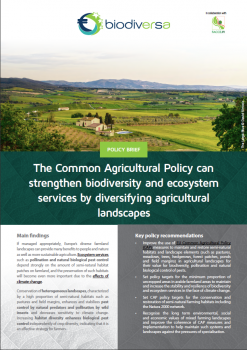
The Common Agricultural Policy can strengthen biodiversity and ecosystem services by diversifying agricultural landscapes
“The Common Agricultural Policy can strengthen biodiversity and ecosystem services by diversifying agricultural landscapes” is based on the combined results of the FARMLAND, APPEAL, CONNECT, EC21C and ECODEAL projects, funded by BiodivERsA and FACCE-JPI. This 4-page brief presents key
- ‹ previous
- 29 of 45
- next ›