- Document
NetworkNature Knowledge Brief: Taking nature-based solutions up the policy ladder - from research to policy action
This Knowledge Brief produced by NetworkNature aims to disentangle the complexities associated with the integration of research and policy with regards to nature-based solutions (NbS) implementation and mainstreaming. The brief provides an overview of the NbS knowledge gaps resulting from an
- Document
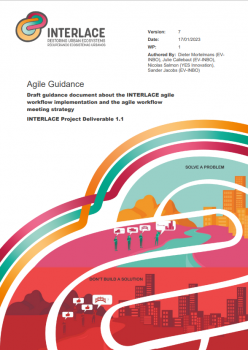
Interlace Agile Guidance
The purpose of this guidance document is to provide theoretical and practical guidance on achieving an agile transformation in a Research and Innovation project such as INTERLACE. The guidance document gives an introduction on the key values and principles of working agile, followed by an
- Empty
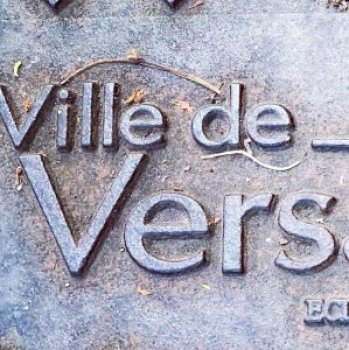
Seedbed Intervention: Versailles
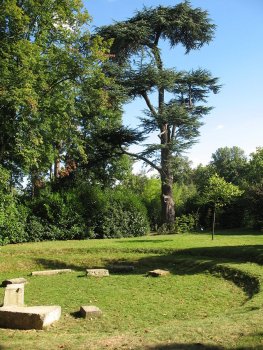
The seedbed intervention in Versailles took place in the Square Blaise Pascal which will be the site of the NBS interventions and is currently composed of 3 sections: 1300sqm park for children with many play facilities, 1730sqm park intensive green space with cherry trees and ping pong tables and a
- Document
Sharing-profits methodology for community forest arrangement
The PRI.FOR.MAN Project aimed to refine profit-sharing methodology for community forest management, ensuring fair timber profits for each owner.
- Web platform
Naturaleza Transformativa
Naturaleza Transformativa: soluciones para la biodiversidad y las personas en Latinoamérica y el Caribe, emerge como una plataforma digital de conocimiento e innovación para la comunidad científica y de práctica en la región. Está diseñada como un repositorio dinámico de información y experiencias
- Audio
- Event
- Report
- Slides
- Video
ÁLTALÁNOS: Ember- és természetközpontú településfejlesztés - URBACT Konferencia és Workshop
2024. április 17-én került sor az Építési és Közlekedési Minisztérium, a Magyar Agrár- és Élettudományi Egyetem, valamint a TeAM HUb-ot alapító és koordináló BURST Nonprofit Kft. társzervezésében az Új Európai Bauhaus Fesztivál magyarországi kísérőrendezvényére Budapesten. A rendezvényen kiemelt
- Document
- Report
State of Finance for Nature 2022 Report
The second edition of the State of Finance for Nature report launched today reveals that nature-based solutions are still significantly under-financed. If the world wants to halt biodiversity loss, limit climate change to below 1.5C and achieve land degradation neutrality by 2030, current finance
- Training
- Video
INTERLACE MOOC on Nature-based Solutions: (1) INTRODUCTION to urban nature-based solutions as a tool to address global challenges.
Urban areas across the globe are facing unprecedented challenges—pollution, climate change, urban sprawl—and traditional solutions are falling short. The INTERLACE project’s Massive Open Online Course showcases how nature-based solutions offer a promising approach to help create resilient,
- Policy Brief
Governance innovation through nature-based solutions - Policy Brief December 2019
Understanding the factors that characterized successful nature-based solution governance models is essential for advancing policy instruments and institutional reform that can better enable the implementation and up-scaling of these solutions. Researchers at IIASA and the University of Geneva
- Guidance
Reflexive Monitoring Guidebook
Reflexive monitoring is an evaluation method that gives urban practitioners insight into the progress of their project in real time. It helps them evaluate day- to-day activities and to respond to them while considering the bigger picture.This is especially helpful when addressing the complex
- Blog
Mapping awareness, perceptions and education on biodiversity and Nature-Based Solutions (NBS) in Europe
In ᴇNᴀBʟS, we are starting our common journey by looking at the European landscape of biodiversity and NBS, especially in higher education. One of the main goals of this basic step is to identify the presence of NBS in universities and technical vocational education and training institutions (
- Paper
The environmental health citizen interview tool: towards an inclusive qualitative environmental wellbeing approach in support of planetary health
Nature-based Solutions (NbS) are vital for addressing climate change and biodiversity loss, yet their benefits are often unequally distributed. This study introduces the Environmental Health Citizen Interview Tool, aiming to inclusively capture diverse perspectives on environmental wellbeing using
- Document
Nature-based solutions Business information package
Whether you are just starting out in this field or are a professional already, or simply want to learn more, this document has useful information for everyone. The package starts with introducing the concepts of nature-based solutions and enterprises. We then present examples of nature-based

- Guidance
Guidance for monitoring pollinators in urban habitats
This guidance aims to bring tools and knowledge for cities to use pollinators as indicators of their urban greening and carry out pollinator monitoring. It builds on the EU Commission guidance for pollinator-friendly cities, and explores options for pollinator monitoring in more depth. It features
- Document
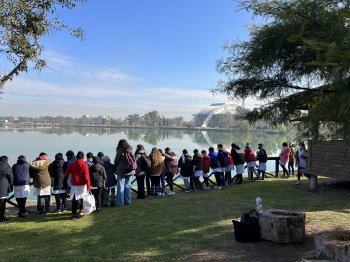
Conexus key learning factsheet series - Adaptive Governance for Successful Urban Nature-based Solutions
This factsheet explores the Adaptive Governance of Nature-based Solutions (NbS) in European and Latin American cities. It aims to address the challenges that hinder this governance approach—an alternative to the traditional top-down, unilateral governance—and brings forward key common and context-
- Document
- Guidance
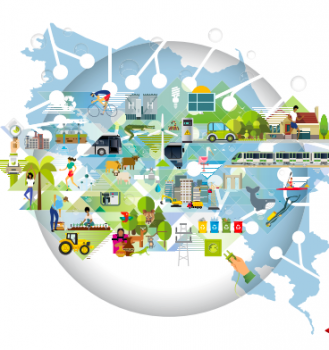
National decarbonisation plan: Government of Costa Rica
The National Decarbonization Plan is a response to the request of the President of the Republic of Costa Rica, Mr. Carlos Alvarado Quesada, to prepare a strategic document that would offer a Roadmap with key actions to consolidate the process towards the decarbonization of the Costa Rican
- Document
- Event
- Product
- Report
People with Nature: Busting 24 Myths to Reverse Biodiversity Loss and Drive Transformative Change through Nature-based Solutions.
As climate change and biodiversity loss intensify, the persistence of certain myths can hinder the transformative change needed to build more sustainable societies. Preconceived ideas rooted in outdated practices or incomplete truths can slow down this change by hampering awareness and obstructing
- Document
Questionnaire for the assessment of the willingness to pay for cultural-tourist ecosystem services
The evaluation was conducted using a dual approach: first, by assessing the importance of various ecosystem services for users (e.g., landscape, biodiversity, etc.) with response scores ranging from 1 to 7; second, by gauging how the Monte Nerone area was perceived to respond to these services.

- Empty
Visionary and integrated solutions to improve well-being and health in cities: Clustering Activities - Joint Manifesto
Report The following is a joint manifesto from four sister projects which calls on European cities to launch initiatives that offer visionary and integrated solutions at the intersection of social, cultural, digital and nature-based solutions (NBS) to increase the health and well-being of

- Event
- Slides
- Training
ZÖLD-KÉK INFRASTRUKTÚRA: "Zöldinfrastruktúra a 2021-2027-es programozási időszakban" című esemény előadás anyagai"
A 2021. októberében megrendezett Miniszterelnökség által szervezett "Zöldinfrastruktúra a 2021-2027-es programozási időszakban" című esemény előadás anyagai, előadók között többek között: Magyar Urbanisztikai Társaság, Innovációs és Technológiai Minisztérium, Balatonfelvidéki Nemzeti Park
- 1 of 20
- next ›