Marketplace
- Dataset
Georgian Biodiversity Database
This internet resource aims to introduce the world-wide scientific (and not only scientific) community to the biological diversity of Georgia (and, to certain extent, the Caucasus ecoregion).
- Paper
The case for mainstreaming nature-based solutions into integrated catchment management in Ireland
The intensification of European policies, agreements and regulations for climate action, water resources, energy, agriculture and forestry, and biodiversity is pressurising governments to adopt a wider portfolio of actionable solutions that are more financially and socially sustainable as well as
- Document
Innovative tools for collaborative forest management
Enhance forest management through understanding the forest resources, identifying conditions for resource mobilization and by knowledge sharing among stakeholders for multi-partner forest management.
- Report
Restoring nature can remove huge amounts of EU emissions
Restoring degraded terrestrial habitats across the EU could take up to 300 million tonnes of CO2 equivalent out of the atmosphere each year – as much as the combined annual greenhouse gas (GHG) emissions of Belgium, the Netherlands, and Luxembourg, new research reveals. The findings show the huge

- Video
Webinar: Ireland's Contribution to a Greener Future
The webinar "Ireland’s Contribution to a Greener Future", hosted by GoGreenRoutes on 16 March 2021, gathered Irish partners involved in EU H2020 and other funded research projects related to the environment, cities and health and well-being. The webinar opened with presentations from

- Paper
Peer-reviewed paper: Harnessing the potential of nature-based solutions for mitigating and adapting to climate change
Abstract: Although many governments, financial institutions, and corporations are embracing nature-based solutions as part of their sustainability and net-zero carbon strategies, some nations, Indigenous peoples, local community groups, and grassroots organizations have rejected this term. This
- Document
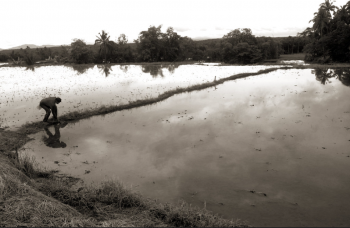
VÍZGAZDÁLKODÁS: Dombvidéki természetalapú vízmegtartási megoldások
A Magyar Mérnöki Kamara Kiadványsorozatában megjelent mérnöki útmutató egy segédlet a települési szintű klíma adaptációhoz. A szöveg összegyűjti és rendszerezni azokat a fogalmakat és ismereteket, amik szükségesek a települési szintű vízgazdálkodási rendszerek kialakításához. Bemutatja a
- Report
NetworkNature report on practical, research and innovation needs
This report on practical, research and innovation needs was prepared in the context of NetworkNature Work Package 3. The aim was to compile an evidence base for Nature-based Solutions (NbS), to be used to support the uptake and proliferation of NbS in planning, strengthening the practical
- Training
Urban Nature: Connecting Cities, Sustainability and Innovation Course
How can we work with nature to design and build our cities? This course explores urban nature and nature-based solutions in cities in Europe and around the world. We connect together the key themes of cities, nature, sustainability and innovation. We discuss how to assess what nature-based
- Guidance
- Software
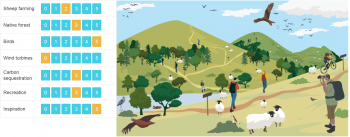
LANDPREF - Interactive tool to assess and visualise land use preferences
LANDPREF is a novel tool to assess desired land use visions. It enables the adjustment of a virtual landscape according to personal preferences of competing land uses, and is an interactive tool for the survey-based assessment of land use preferences. It allows the respondents to interactively
- Policy Brief
Nature-based Solutions for Urban and Regional Water Resilience: What to do with too much (dirty) water
This policy brief explores the opportunities and challenges in the integration of Nature-based Solutions (NbS) into urban and regional water resilience planning. The brief draws from research, policy, and good practice from the wider NbS community, and presents recommendations to enhance the
- Document
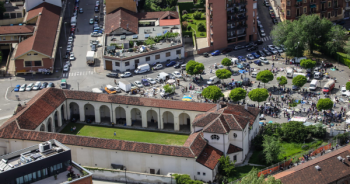
Conexus Life-Lab factsheet series- Valdocco Vivibile: a livable district
The Torino Urban Lab coordinates the Valdocco Vivibile pilot in collaboration with the City of Torino to promote the development of climate-resilient neighborhoods through small-scale and diffused green infrastructure solutions. The pilot has three main pillars: high replicability; multifunctional
- Document
- Empty
Natural environments, psychosocial health, and health behaviors in a crisis – A scoping review of the literature in the COVID-19 context
The COVID-19 outbreak led to major restrictions globally, affecting people’s psychosocial health and their health behaviors. Thus, the purpose of this scoping review was to summarize the available research regarding nature and health in the COVID-19 context. Overall, the findings indicate that
- Document
Policy needs and opportunities for operationalising the concept of ecosystem services - EU assessment
This report presents the results of an EU policy audit that assesses the current level of integration of ecosystem services and natural capital into the current EU policy framework. It also identifies key gaps, needs and opportunities for further integration, including policy instruments that can
- Document
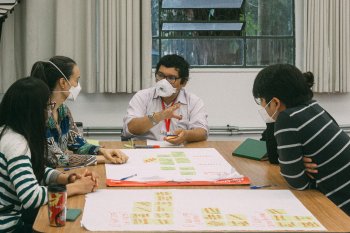
Conexus key learning factsheet series - The Nature Future Workshops
The Nature Futures Workshops (NFW) were an opportunity to think as creatively as possible about the desired futures for nature in our Conexus’ cities in 2050. This factsheet presents an overview of the methods used to explore these futures. Discussions in the workshops generated a series of present

- Training
Greenopolis: Educational platform about sustainable urban development, climate challenges and NbS
A learning platform about healthy and liveable cities. Your nature guide, e-Boti, introduces you to urban development, climate challenges, and nature-based solutions.
- Document
- Report
Conexus Life-Lab Factsheet Series: Co-producing NbS in the “Remodelación Panamericana Norte”
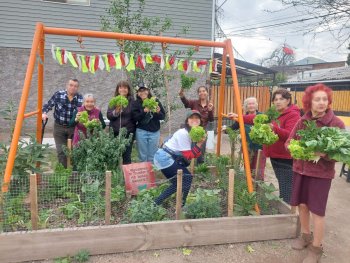
The regeneration of the “Remodelación Panamericana Norte” neighborhood, facilitated by the program “Quiero Mi Barrio,” enabled the improvement of the neighborhood by bringing in Nature-based Solutions (NbS). The accompanying five-step collaborative process supported improving social security and
- Guidance
- Training
MOOC "Integrating ecosystem services in decision-making"
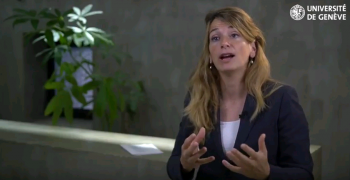
This 10 minute massive open online course (MOOC) given by Prof. Dr. Adrienne Grêt-Regamey from the Planning of Landscape and Urban Systems Group at ETH Zurich is part of a larger online course on Ecosystem Services, produced by the University of Geneva, the Geneva Water Hub, the Luc Hoffmann

- Report
UN World Water Development Report 2022
Accounting for approximately 99% of all liquid freshwater on Earth, groundwater has the potential to provide societies with tremendous social, economic, and environmental benefits and opportunities. Groundwater already provides half of the volume of water withdrawn for domestic use by the global
- ‹ previous
- 21 of 45
- next ›