Marketplace
- Report
NetworkNature Annual Event Report: Upscaling nature-based solutions in policy and practice
This report was produced by NetworkNature to summarise the main outcomes of the NetworkNature Annual Event "Upscaling nature-based solutions in policy and practice", which took place on 27th September in Brussels. The event provided the opportunity to learn more about the state-of-the-
- Report
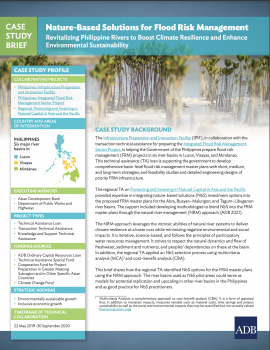
Nature-Based Solutions for Flood Risk Management
The Infrastructure Preparation and Innovation Facility (IPIF), in collaboration with the transaction technical assistance for preparing the Integrated Flood Risk Management Sector Project, is helping the Government of the Philippines prepare flood risk management (FRM) projects in six river basins
- Document
- Product
- Report
Community Organizing Toolkit on Ecosystem Restoration
Ecosystem degradation has reached the far corners of our planet from our precious rainforests to our priceless reefs. Irresponsible human activities have caused and exacerbated our climate crisis and ecosystem degradation, forcing us to cope with biodiversity loss, habitat destruction, dramatic
- Guidance
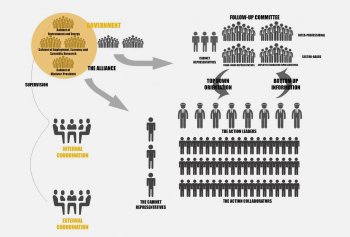
Environment Employment Alliance
Methodological guide for fostering sustainability transition of key local economic sectors - supporting small local innovative initiatives by governing interaction between public and private actors (or societal niches and public institutions).
- Policy Brief
Using nature based solutions to foster synergies between biodiversity and climate: Missed chances and new opportunities for a sustainable future
This paper assesses how EU policies and investments have spurred the uptake of nature-based solutions to support biodiversity and ecosystem health. It outlines remaining gaps and opportunities on how to best scale up efforts to meet the current EU policy framework’s 2030 objectives. It provides
- Report
Nature-Based Solutions for Coastal and Riverine Flood and Erosion Risk Management
Canadian communities and infrastructure are vulnerable to coastal and riverine flood hazards. The risks associated with coastal and river flooding are escalating as a result of development in river floodplains and coastal zones, and the effects of climate change on flood and erosion hazards. There
- Document
- Guidance
OpenNESS Synthesis paper: Good governance
Governance of ecosystem services (ES) and natural capital (NC) is one of the four major challenges addressed by OpenNESS. The term governance indicates a mode of steering that differs from state-centred top-down command-and-control approaches, as it is marked by the inclusion of a variety of actors
- Dataset
- Document
- Training
Assessment and mapping of ecosystem services - Development of methods for assessment and mapping of ecosystem services of marine and inland waters
The general purpose of the project "Development methods for assessment and mapping of ecosystem services of marine and inland waters" is to help stop the decrease of biodiversity in water bodies and damaging of ecosystem in the European Union by supporting the preservation and restoration
- Document
- Guidance
- Infographic
- Report
- Slides
- Training
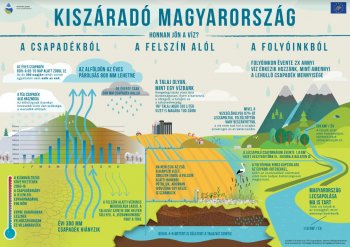
VÍZGAZDÁLKODÁS: Természetes vízmegtartó megoldások a települési klímaalkalmazkodásban
A 2018 és 2021 között megvalósult LIFE-MICACC projekt célja az önkormányzatok integráló és koordináló szerepének megerősítése az éghajlatváltozáshoz való alkalmazkodás érdekében, az alábbiakban közzétett tudásanyagok a projekt keretén belül készültek. Az anyagok első csoportja az önkormányzatoknak
- Training
Nature in the city: turning knowledge into urban forestry practice
Are you passionate about forestry, sustainability, and urban design? Would you like to learn how to promote the green transition of cities? This online course provided by Uforest is the right opportunity for you! Urbanisation and climate change are two of the most difficult challenges our
- Empty
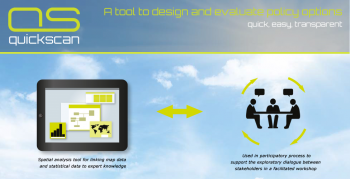
QUICKScan
QUICKScan is a tool to facilitate the decision process in participatory settings. By including stakeholder knowledge and preferences and the ability to calculate impacts in-situ, QUICKScan combines tacit expert knowledge with available spatially-explicit monitoring and statistical and uses
- Document
- Guidance
Method Factsheet - Smartphone App
The MapNat tool is designed to be applied by citizens and scientists who are interested in mapping the use of mainly cultural, but also some provisional and regulating, services and disservices. MapNat enables its users to map ES in three different ways as points, lines or areas on a map on their
- Paper
How to make complexity look simple? Conveying ecosystems restoration complexity for socio-economic research and public engagement
Ecosystems degradation represents one of the major global challenges at the present time, threating people’s livelihoods and well-being worldwide. Ecosystem restoration therefore seems no longer an option, but an imperative. Restoration challenges are such that a dialogue has begun on the need to
- Software
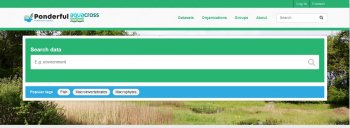
PONDERFUL INFORMATION SYSTEM
The Information Platform of the PONDERFUL and the AQUACROSS projects seeks to advance the implementation of Nature-based solutions using aquatic ecosystems for the delivery of ecosystem services, biodiversity conservation and climate change mitigation and adaptation.

- Dataset
The Copenhagen global avian distributional database
Distributional data for more than 10 000 species of birds for all land and non-pelagic species was mapped for each species at a resolution of 1x1 latitude-longitude grid cells.
- Infographic
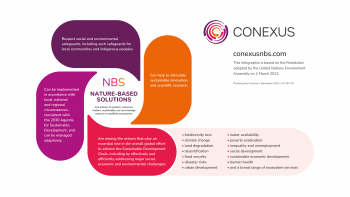
Nature-based solutions definition infographics II
The adoption of the globally agreed definition of nature-based solutions by the UN Environment Assembly in March 2022 was a great boost to international collaboration. It placed the focus sharply on accelerating the implementation of nature-based solutions to tackle societal challenges. To help
- Report
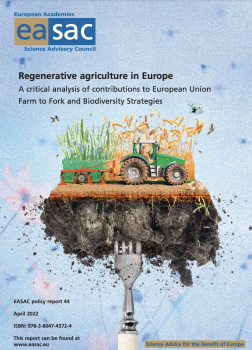
European Academies Science Advisory Council - Regenerative agriculture in Europe
This report takes as a first point of departure the goals and commitments made in the recent European Commission’s Green Deal, and specifically the Biodiversity and Farm to Fork Strategies, for dealing with both climate change and biodiversity loss while at the same time securing production of an
- Document
GrowGreen Thematic Factsheets
The GrowGreen Partners made a collaborative effort for creating a list of factsheets, in order to summarise the results of the various projects. The factsheets are organised by thematic area, that are biodiversity, economic impacts, heat stress, social benefits, water runoff, and water quality.

- Training
Challenges and opportunities of metropolitan agriculture: micro learning online course
Urban and peri-urban agriculture is a matter of growing importance on a territorial scale. It is reflected in actions aimed at reconnecting the urban population to agricultural production and relocating food systems by promoting short circuits. Its development is based on entrepreneurs who carry
- Dataset
- Document
- Guidance
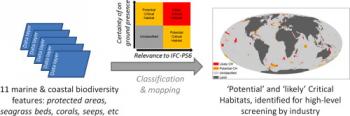
A global map to aid the identification and screening of critical habitat for marine industries
This paper provides a global map to identify potential and likely marine and coastal Critical Habitat, as defined by 'International Finance Corporation Performance Standard 6'. Eleven biodiversity features are identified which can be used as an early screening aid by industries and
- ‹ previous
- 14 of 45
- next ›