Marketplace
- Guidance
Mainstreaming Biodiversity and Development Rapid Diagnostic Tool
This tool is intended to help policy makers and other stakeholders understand the extent to which biodiversity and development objectives are already integrated at the national level and the obstacles and constraints that need to be overcome to promote further, and more effective, integration. It
- Training
- Video
INTERLACE MOOC on Nature-based Solutions: (6) MONITORING and evaluating NbS using a co-creation approach
Urban areas across the globe are facing unprecedented challenges—pollution, climate change, urban sprawl—and traditional solutions are falling short. The INTERLACE project’s Massive Open Online Course showcases how nature-based solutions offer a promising approach to help create resilient,
- Paper
Study: The application of an environmental performance framework for climate adaptation innovations on two nature-based adaptations
In this paper, they introduce and test a framework to qualitatively assess the environmental impact of climate adaptation innovations with the ambition to facilitate the implementation of these adaptations. The framework was designed to enable continuous environmentally conscious benchmarking based
- Report
Biodiversity and nature-based solutions: Analysis of EU-funded projects
The EU Biodiversity Strategy for 2030 aims to secure healthy, resilient, biodiversity-rich ecosystems that deliver the range of services essential to the prosperity and well-being of citizens. Nature-based Solutions (NbS) – with healthy and biodiverse ecosystems at their core - are central to
- Policy Brief
Design Brief 1- Biodiversity-positive Design in Urban Areas with NbS: Approaches
This NetworkNature design brief series, the first of its kind, comprises three design briefs on biodiversity-positive design recommendations for urban and peri-urban areas with nature-based solutions. The series, developed with support of IFLA Europe, presents simple design suggestions for
- Document
- Guidance
OpenNESS Synthesis paper: Ecosystem services and transdisciplinarity
Similar to related approaches such as post-normal science, citizens science, participatory approaches, transdisciplinarity (TD) goes beyond multi- and interdisciplinary research by co-creating knowledge with and for societal actors. Therefore the language, the concepts and the methodology used in
- Guidance
Using ecosystem risk assessment science for ecosystem restoration: A guide to applying the Red List of Ecosystems to ecosystem restoration
This guide was developed to promote the application of the science of ecosystem risk assessment, which involves measuring the risk of ecosystem collapse, in ecosystem restoration. It explores how the IUCN Red List of Ecosystems and ecosystem restoration can be jointly deployed to reduce risk of
- Dataset
- Document
Database of good practice tools for the design and implementation of NbS, including factsheets for 10 tools
Ten approaches will be showcased on the Innovation Hub as short factsheets, highlighting their scope of application and examples of their EU and/or CELAC application.
- Guidance
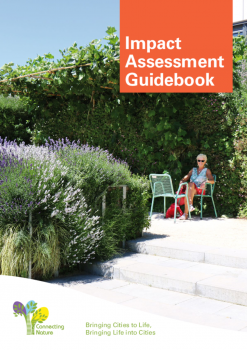
Impact Assessment Guidebook
This Guidebook presents the Connecting Nature Impact Assessment Framework. This Framework is aimed at supporting cities in developing and successfully implementing robust monitoring and evaluation plans that can deliver systematic and comparable evidence as to NbS effectiveness. This framework

- Infographic
KPI analysis process for cities
When planning for nature-based solutions, it is important to map and analyse how they would fit within the wider strategy. Connecting Nature front runner cities Poznan, Glasgow and Genk have mapped their cities' nature-based solution exemplar against their cities strategic development
- Document
Good practices in Do.Na.To Project communication and technical formation
Effective communication was key in managing Douglas fir forests in Tuscany, with various project partners sharing insights through various platforms and organizing tours and conferences to promote knowledge exchange.
- Guidance
- Product
- Report
- Training
- Video
- Web platform
MEZŐGAZDASÁG: Agrárerdészeti tudástár
" Az agrárerdészet mezőgazdasági kultúra és fák harmonikus együtt-termesztése, kiegészítve esetleg más területhasználati módokkal, egy jövedelmező gazdálkodás kialakítása érdekében." Az alábbiakban a témához kapcsolódóan több, átfogó tudásanyagot gyűjtöttünk össze, melyek hasznos
- Document
Study on specific design elements of biodiversity offsets: Biodiversity metrics and mechanisms for securing long term conservation benefits
The EU's biodiversity strategy specifies a target to halt the loss of biodiversity by 2020. A No Net Loss initiative is an important component of the EU's strategy to achieve this. In accordance with the mitigation hierarchy, it will seek to strengthen efforts to first avoid, then
- Paper
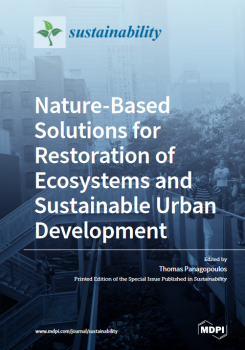
Nature-Based Solutions for Restoration of Ecosystems and Sustainable Urban Development
Cities are facing a broad range of social and environmental challenges due to the current pressure of global urbanization. Nature-based solutions aim to utilize green infrastructure to improve people’s health and wellbeing. The design of urban environments must embrace the individual ideals of
- Guidance
- Policy Brief
- Report
Can decentralised treatment systems address the challenges of wastewater management in the EU at the local level?
Decentralised wastewater treatment systems (DEWATS) and Nature-based Solutions (NbS) improve the resilience of wastewater treatment systems and support EU water policies. This brief provides case studies and recommendations to unlock the full potential of DEWATS across the current regulatory

- Paper
Climate crisis, cities, and health
More than ever, the climate crisis is becoming a health crisis. An estimated 5 million people globally die each year because of suboptimal temperatures,1 with a large proportion of heat-related mortality (37%) attributable to human-induced climate change.2 Cities have an important role in climate
- Document
- Guidance
ZÖLD-KÉK INFRASTRUKTÚRA: Innovatív és hatékony megoldások zöldfelületek menedzseléséhez
A kézikönyv esettanulmányok segítségével mutatja be az URBAN GREEN BELTS (UGB) - Városi zöldövezetek projekt során megvalósított tevékenységeket. A projektpartnerek által megszerzett ismeretek és tapasztalatok alapján összegyűjtött tudásanyag a gyakorlatba is beépíthető, sokoldalú eszköz- és
- Empty
Hydro Profi Line®
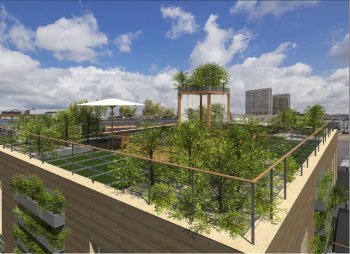
A unique new type of proven planter system for greening of impervious surfaces. Solitary containers/flower pots as well as areal. Horizontal as well as vertical. Indoors as well as outdoors. Reducing water consumption by up to 80% and enabling possibility for exchange of all species and sices (up

- Empty
Clima East
Clima East is a European Union funded project package assisting the Eastern Neighbourhood Partnership Countries and Russia in approaches to climate change mitigation and adaptation.
- Guidance
Beyond Carbon Credits: A BLUEPRINT FOR HIGH-QUALITY INTERVENTIONS THAT WORK FOR PEOPLE, NATURE AND CLIMATE
This document sets out WWF’s views on implementing high-impact and high-quality nature-based solutions for climate mitigation from the perspective of the people and the places where we work, as a companion to WWF’s Blueprint for Corporate Action on Climate and Nature, which focuses on business-
- ‹ previous
- 13 of 45
- next ›