
- Document
INTERLACE Stakeholder Engagement Strategy
Stakeholder engagement is a central element of the INTERLACE project as it aims to co-produce tools, governance instruments and other project deliverables with local stakeholders, as well as facilitate knowledge exchange between local, regional and global stakeholders, to inform and support the

- Guidance
A Framework for Measuring and Reporting of Climate-related Physical Risks to Built Assets
In August 2021, UKGBC launched the Measuring and Reporting Climate-related Physical Risks task group in response to the upcoming mandatory disclosure of climate-related risks. For large organisations and financial institutions within the UK, this comes into force from April 2022 in line with the
- Dataset
- Document
- Event
- Guidance
Wal-ES Platform
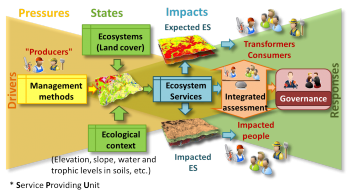
Wal-ES is the walloon (Southern part of Belgium) platform on ecosystem services which aims to develop decision support tools based on this concept. During its one year of funding, Wal-ES set up the foundations for the development of these tools. A conceptual and an assessment frameworks have been
- Document
Stakeholder Engagement Guide - Nature Based Solutions in Cities
What is this guide? Guidance and a set of tools to establish a strong and consistent foundation for outreach and engagement when undertaking City projects in Nature Based Solutions, Regeneration, Housing etc. Who is it for? Any City Official carrying out a natural or built environment project that
- Document
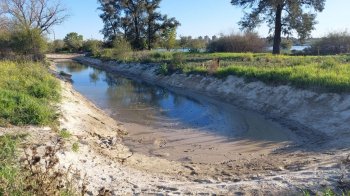
Conexus Life-Lab factsheet series - Wetland Lugano, the restoration of an aquatic ecosystem
The Lugano wetland pilot is restoring an aquatic ecosystem lost by urbanization in the south of Buenos Aires. The pilot is led by the city government. It involves key stakeholders to promote social awareness about the benefits that wetlands provide to the community. The enhancement of biodiversity
- Report
Report knowledge base/action framework Low carbon | High air quality NbS potentials
As the acronym already indicates, JUSTNature introduces the normative notion of justice. An initial analysis of the scope of nature-based solutions and the role of justice suggests that issues of social and environmental justice are only considered peripherally, and that so far no dedicated
- Report
European Roadmap to 2030 for Research and Innovation on Nature-based Solutions
This Roadmap to 2030, facilitated by NetworkNature, identifies core action areas for European research and innovation on Nature-based solutions (NbS) that are essential to achieve EU goals for NbS development and deployment. It offers a holistic view of the efforts made thus far, identifies
- Guidance
Reflexive Monitoring Guidebook
Reflexive monitoring is an evaluation method that gives urban practitioners insight into the progress of their project in real time. It helps them evaluate day- to-day activities and to respond to them while considering the bigger picture.This is especially helpful when addressing the complex
- Document
- Guidance
Conexus Deliverable 4.3: Ecosystem of guidelines and decision-support tools to stimulate NbS co-creation
The CONEXUS project has meticulously curated this Ecosystem of Guidelines to effectively disseminate the rich insights and practical knowledge gained through the comprehensive and action-oriented work on nature-based solutions across Latin America and Europe. This collection of guiding resources is

- Document
- Guidance
- Product
GrowGreen NbS Co-design Guide
The “GrowGreen NbS co-design Guide”, made by Bipolaire, could be materialised as a tool that guides the NbS co-design process through questions. It is structured similarly as the GCF (Green Cities Framework), based on three main pillars: Planning, Mobilising, and Evaluating. Municipalities that

- Document
- Report
EU - China collaborations in the GrowGreen project
This report examines the scope for future EU China collaboration on Nature Based Solutions (NbS). In the original call for “demonstrating innovative nature based solutions in cities” (H2020-SCC-2016-2017) the call made reference to the EU-China Sustainable Urbanisation Partnership and the EU-China

- Document
CONEXUS Policy Brief 7 - Integrating Nature-Based Solutions in Planning Instruments
The Regional Government of Santiago (RGS) aims to incorporate ecological planning criteria into its planning instruments and strategies, fostering a more resilient and equitable city-region. This policy brief outlines the city’s learning-by-doing approach, presenting three pilot projects of Nature-
- Report
NbS Policy Screening and Analysis of Needs and Gaps for 2024-2030
This report aims at providing an overview of the sustainability policy landscape as well as mapping policy needs and gaps in relation to the deployment of Nature-based Solutions (NbS) in the EU. The NetworkNature platform brings together the NbS community of innovators, practitioners and developers

- Document
Protecting the Amazon can protect the Climate
Amazon Protected Areas are key in helping communities and nature adapt to a changing climate. They build resilience to climate change globally, mitigate the impacts of climate events, ensure the provision of ecosystem services and protect biodiversity. Protected Areas should be included in climate
- Video
PHUSICOS: Living Lab en Erill la Vall (Catalunya, España)
Do you know about the problem that the population of Erill la Vall in Catalonia faces? Are you interested in knowing more? Here you will be able to view explanations from PHUSICOS project experts and images about this erosive problem and the nature-based solutions designed to respond to it. The
- Report
Nature Based Solutions in education
Citizens and experts have identified better awareness of the opportunities, benefits, and limitations of nature-based solutions as one of the main factors that could facilitate the transition to more sustainable cities and territories. Nature-based Solutions (NbS) use nature and ecosystems to
- Document
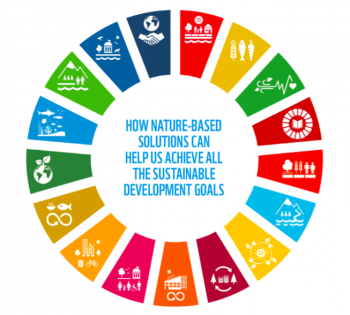
Nature In All Goals
Nature is essential to achieving all the Sustainable Development Goals. It provides us with vital resources such as food, air, water, and energy. In addition, nature can be harnessed to create solutions to the challenges set out in the SDGs, solutions that are positive for social, economic,

- Report
Comprehensive Framework for NbS Assessment
A product of Workpackage 4 of the EU-H2020 project PHUSICOS is a comprehensive framework to verify the performances of NBSs in risk management processes from both technical and socio-economic points of view. The comprehensive framework assesses the beneficial role of NBSs in ecosystem services,
- Document
Good practices in Do.Na.To Project communication and technical formation
Effective communication was key in managing Douglas fir forests in Tuscany, with various project partners sharing insights through various platforms and organizing tours and conferences to promote knowledge exchange.

- Policy Brief
How Will Nature Restoration Help Fulfil EU Environmental Policy Objectives?
The EU Commission published its proposal for a new Nature Restoration Regulation in June 2022. In this context, IEEP and Ecologic Institute – as part of the Think Sustainable Europe network – published a series of thematic policy briefs to inform Members of the European Parliament and other
- ‹ previous
- 16 of 20
- next ›