Marketplace
- Document
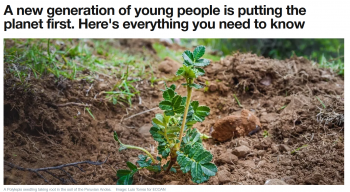
A new generation of young people is putting the planet first. Here's everything you need to know
We are witnessing monumental changes to the balance of the natural world and how the human world, responsible for these changes, is responding. The impact from climate change is coinciding with the coming of age of a generation of young ecopreneurs – Generation Restoration – who are choosing to

- Dataset
- Document
- Software
Netbiome-CSA Biodiversity Toolbox
The Biodiversity Toolbox of the NetBiome-CSA network—a partnership for research and sustainable management of (sub)tropical biodiversity in European Overseas Regions (ORs) & Territories (OCTs)—provides a database of stakeholders in biodiversity management and research, including areas of

- Guidance
BiodivERsA Stakeholder Engagement Handbook
The BiodivERsA Stakeholder Engagement Handbook is a practical guide designed to assist research teams identify relevant stakeholders to engage with in order to enhance the impact and social relevance of their work. The Handbook draws upon exiting literature and presents case studies that provide

- Dataset
The Norwegian Nature Index
Norway's Nature Index is intended to document overall trends for the state of major ecosystems throughout the country, and to provide a readily available overview of whether Norway is making progress towards its goal of halting the loss of biodiversity.
- Guidance
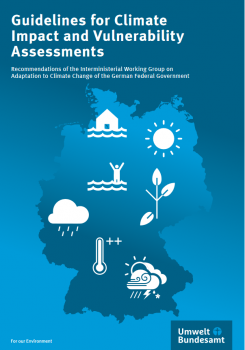
Guidelines for Climate Impact and Vulnerability Assessments Recommendations of the Interministerial Working Group on Adaptation to Climate Change of the German Federal Government
These guidelines of the Interministerial Working Group on Adaptation to Climate Change of the German Federal Government (IMA Adaptation) provide methodological recommendations for the execution of climate impact and vulnerability assessments at regional and national level. They are intended to
- Empty
Method Factsheet -Advanced Matrix Approach
Matrix approaches are quick and simple ways to get an overall spatially-explicit picture of the ES in case study areas. The method is based on the idea of linking tabular spreadsheet data and spatial data together, i.e. joining external datasets to spatial units to create maps. A modified,
- Event
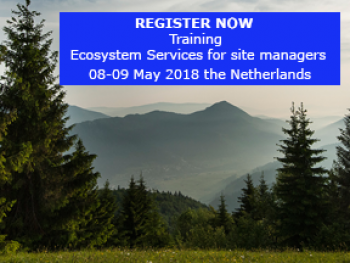
Training on ecosystem services for site managers
Eurosite, in cooperation with EKLIPSE, is organising a two-day short course, which will provide managers of protected sites with the necessary knowledge and steps to take in achieving Science and Policy collaboration regarding biodiversity and ecosystems services on one hand, and how to put them in
- Policy Brief
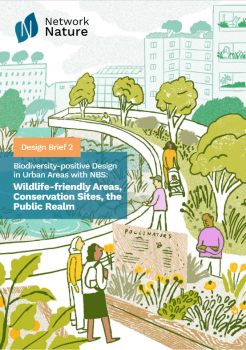
Design Brief 2- Biodiversity-positive Design in Urban Areas with NbS: Wildlife-friendly Areas, Conservation Sites, the Public Realm
This NetworkNature design brief series, the first of its kind, comprises three design briefs on biodiversity-positive design recommendations for urban and peri-urban areas with nature-based solutions. The series, developed with support of IFLA Europe, presents simple design suggestions for
- Guidance
Governance Guidebook
The aim of this Guidebook is to outline a key aspect of how to embed nature-based solutions in your city – and that is governance. Governance is broader than government. It covers the legal frameworks, the formal and informal networks and organisations and the rules and policies related to the
- Document
Use of Bite technology for tree infusion in chestnut groves
Endotherapy offers an efficient alternative for treatments application in chestnut groves
- Video
What is PHUSICOS / ¿Qué es PHUSICOS?
Presentation of the PHUSICOS project / Presentación del proyecto PHUSICOS
- Document
GO SURF: decision support system for a participatory approach to forest management.
Decision Support Systems for Forestry (DSSF) are recognized as vital tools for implementing sustainable forest management and providing multiple ecosystem services.
- Document
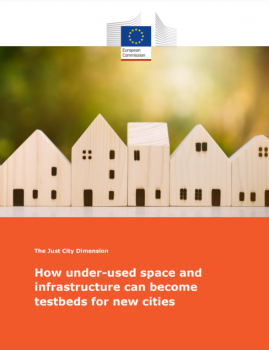
How under-used space and infrastructure can become testbeds for new cities
This article is part of a series of articles based on the 14 Partnerships of the Urban Agenda for the EU. Structured around the three city dimensions of the New Leipzig Charter (the Productive, the Green, and the Just City), the articles link Partnerships’ actions and activities with other relevant
- Guidance
- Software
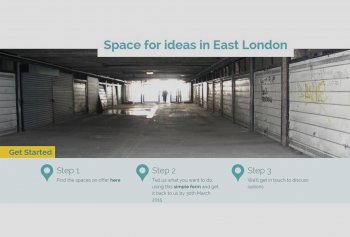
Revitalizing Spaces
Methodology (accompanied by an online platform) for identifying and activating underused spaces through community-led proposals.
- Report
NetworkNature Annual Event Report 2023: Enabling transformation through and for Nature-based Solutions
The report summarises the key outcomes of the NetworkNature Annual Event 2023 “Enabling transformation through and for Nature-based Solutions”, which took place on 8th June 2023, at the Flagey Building in Brussels and brought together more than 150 participants to discuss the transformative nature

- Video
BS 8631: Adaptation to climate change - Using adaptation pathways for decision making
The climate is changing and making the right decisions around adaption and resilience is increasingly important. BSI is taking a lead in supporting organizations with good practice in this area. With an introduction from the Adaptation sub-Committee of the UK’s Climate Change Committee, the
- Blog
Mapping awareness, perceptions and education on biodiversity and Nature-Based Solutions (NBS) in Europe
In ᴇNᴀBʟS, we are starting our common journey by looking at the European landscape of biodiversity and NBS, especially in higher education. One of the main goals of this basic step is to identify the presence of NBS in universities and technical vocational education and training institutions (
- Document
Decision support tool : an Integrated green grey framework
Guidance on innovations in green grey infrastructure - costed examples and more, see http://eprints.gla.ac.uk/150672/.

- Video
MEZŐGAZDASÁG: Talaj = Élet
Az intenzív gazdálkodás miatt a világ termőtalajainak jelentős hányada leromlott állapotban van vagy már véglegesen meg is semmisült. Ennek oka a talajok szervesanyag-tartalmának csökkenése, az ebből következő szerkezetromlás, tömörödés és az erózió, illetve a savanyodás, a szikesedés vagy éppen a

- Dataset
- Document
- Training
REstoring rivers FOR effective catchment Management (REFORM)
REFORM (REstoring rivers FOR effective catchment Management, http://reformrivers.eu/) brought together 26 renowned research institutes and applied partners from15 European countries to generate tools for cost-effective restoration of river ecosystems, and for improved monitoring of the biological
- ‹ previous
- 7 of 45
- next ›