Marketplace

- Paper
The impact of exposure to green or bluespace on dietary intake and food choices among adults—A systematic literature review
Extensive research has shown that spending time in natural greenspaces has a positive impact on health. However, there is limited evidence regarding potential factors that may influence these effects. This review aimed to assess the strength of the evidence and potential impact of exposure to green
- Guidance
GIZ ValuES - Method Profile: Different interview formats
Interviews are a key method for obtaining first-hand information and field data on any aspect that is of interest. If well-conducted and properly analysed, interviews can significantly advance understanding of complex issues. Various formats exist: An in-depth interview captures how people value or
- Document
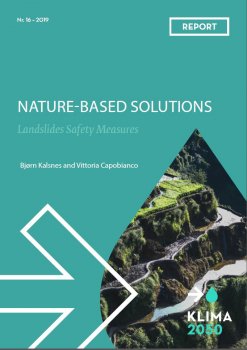
Nature Based Solutions - Landslides Safety Measures
The report presents an overview of Nature-Based Solutions (NbS) and their main applications to address climate-related challenges (temperature, floods, sea level rise, landslides, droughts) with a special emphasis on innovative physical measures for landslides mitigation.
- Guidance
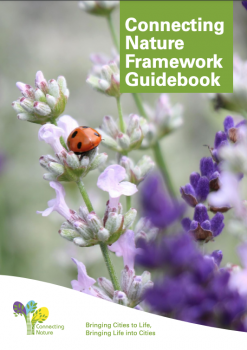
Connecting Nature Framework
Connecting Nature has developed an introductory guidebook to the overall Connecting Nature Framework and a series on each of the individual elements to assist you develop your nature-based solution.
- Document
- Product
- Paper
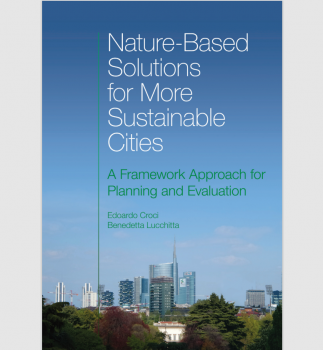
Nature-Based Solutions for More Sustainable Cities: A Framework Approach for Planning and Evaluation
There is a growing recognition and awareness that nature can help provide viable solutions to reduce vulnerability and generate value deploying the properties of natural ecosystems and the services they provide. Investing in nature can lead to substantial environmental, social, and economic
- Document
- Software
- Training
Natural Value Initiative
The Natural Value Initiative (NVI) is Fauna & Flora International's (FFI) platform to engage financial institutions around natural capital by developing tools and methodologies that demonstrate the materiality of nature capital and enables mainstreaming thereof into financial decision-
- Guidance
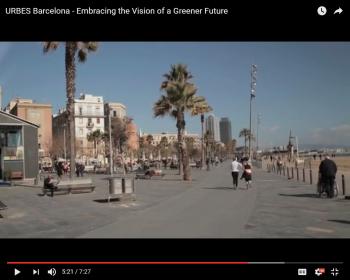
Barcelona - Embracing the Vision of a Greener Future (URBES video)
With 1.62 million inhabitants, Barcelona is one of the most densely populated cities in Europe. Located between the Mediterranean Sea and the mountain range of Collserola, the city has urbanised virtually all available land after various periods of urban expansion. This has led to conflicting
- Document
CASTANIBUS
Partnership to define and exchange "guidelines for the study, conservation and evaluation of chestnuts and the best type of management to obtain a quality product" thus to revitalize the "culture of chestnut cultivation" and the role of chestnut growers as "guardian of the
- Document
- Guidance
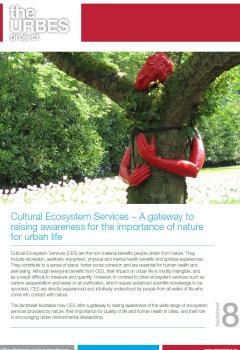
Cultural Ecosystem Services - URBES Factsheet #8
This factsheet illustrates how cultural ecosystem services offer a gateway to raising awareness of the wide range of ecosystem services provided by nature, their importance for quality of life and human health in cities, and their role in encouraging urban environmental stewardship.
- Document
- Guidance
OpenNESS Synthesis paper: Non-monetary valuation
To increase the applicability of NMV it is necessary to clarify the boundaries and the terminology of the field, and address considerations with regard to the context-specificity of non-monetary techniques.
- Empty
NetworkNature Knowledge Brief
The brief provides an overview of the NbS knowledge gaps resulting from an analysis conducted by NetworkNature of a large number of publications, online consultations and dialogues with stakeholders. To reflect the potential of NbS from an environmental, economic and societal perspective, this
- Training
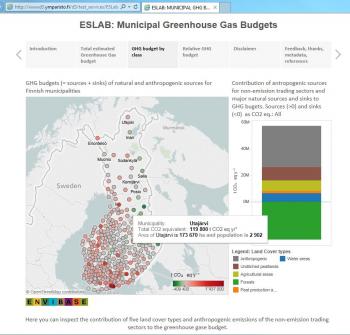
ESLab services test and demonstration site
The test and demonstration version of ESLab services provide 1) visualization of municipal greenhouse gas budgets in Finland, and 2) High resolution carbon budget data for a pilot study region in southern Finland.
- Document
- Product
- Report
Report: The State of Finance for Nature in the G20
The State of Finance for Nature in the G20 report attempts to capture the complete amount and future need for G20 country spending on nature-based solutions assets and activities. It reveals that current G20 investments in nature-based solutions are insufficient, at USD 120 billion/year, and G20
- Document
- Guidance
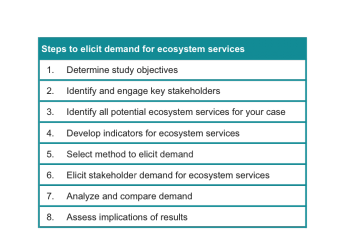
Eliciting Demand for Ecosystem Services: Results and User Guidance from the OPERAs Demand Synthesis Working Group
Based on experience in seven of the OPERAs Exemplar case studies, we summarize what the research team has learned about working with stakeholders to elicit demand for ecosystem services and put forth an eight-step framework for doing so. Each step of the framework includes examples from the OPERAs
- Consultancy
- Dataset
- Document
- Guidance
- Video
Knowledge Centre for Biodiversity
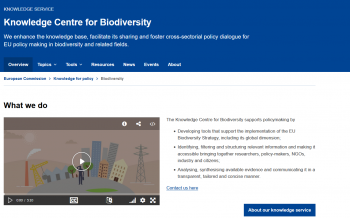
The Knowledge Centre for Biodiversity supports policymaking by Developing tools that support the implementation of the EU Biodiversity Strategy, including its global dimension; Identifying, filtering and structuring relevant information and making it accessible bringing together
- Guidance
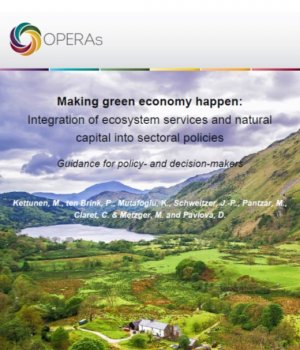
Making green economy happen: Integration of ecosystem services and natural capital into sectoral policies
The integration of ecosystem services and natural capital into the functioning of economic sectors provides a concrete means to initiate a shift towards green economy. This process starts with the integration of ecosystem services and natural capital into the policies governing the different
- Slides
ZÖLD-KÉK INFRASTRUKTÚRA: Városi kékinfrastruktúra, városi zöldinfrastruktúra jógyakorlatok
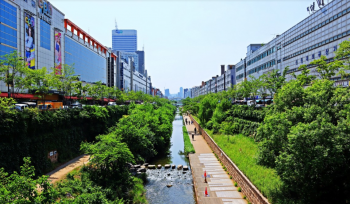
A Szent István Egyetem Tájépítészeti és Településtervezési kara által az URBACT BINIR projekt keretén belül készített összefoglaló anyag. A zöldinfrastruktúrának nem csak az ökoszísztémára van pozitív hatása, hanem a társadalom egészségi állapotára, a település gazdasági vonzerejére, valamint az
- Document
- Guidance
OpenNESS Synthesis paper: Human well-being
Human well-being (HWB) is a central component of the ecosystem services (ES) framework and in fact its major endpoint in terms of what the ES concept aims at. The question of what is meant by, and what specifically constitutes, HWB, is of major importance in any application of the ES concept.
- Document
- Product
- Report
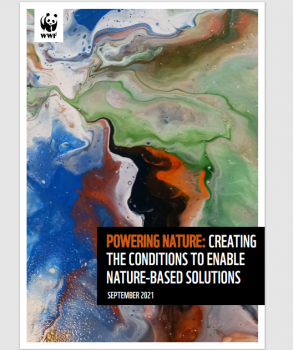
Powering Nature: creating the conditions to enable nature-based solutions
Nature is in freefall. Climate is changing due to humanity’s addiction to burning fossil fuels and converting natural ecosystems for agriculture. This affects in degrading once-productive lands and driving plant and animal species to extinction. And it’s no coincidence that millions of people each
- Document
- Guidance
OpenNESS Synthesis paper: Stakeholder involvement
Stakeholder involvement is not only regarded as an essential element in environmental management and decision making, but also considered critical in the context of ecosystem services (ES).
- ‹ previous
- 44 of 45
- next ›