Marketplace

- Paper
A new evaluation framework for nature-based solutions (NbS) projects based on the application of performance questions and indicators approach
One of the key features of nature-based solutions (NBSs) is their high effectiveness and economic and resource efficiency in solving problems compared to traditional grey interventions. These aspects, however, have so far attracted little attention in the literature but should be considered, as the
- Document
Mapping of forest roads to support touristic activities
OG SURF has mapped the existing roads in its test areas using GNSS receivers and classified them based on their functionality, and identifying any maintenance issues, a prerequisite for identifying additional roads/trials to be opened in the forest.

- Document
Conexus key learning factsheet series - Checklist for Nature-based Solutions Monitoring & Indicators
Monitoring & Indicators (M&I) help document and evaluate the process, progress, performance, and impact of the implementation of Nature-based Solutions (NbS), as well as track whether targets are being met. To support the uptake of M&I in planning practice, this factsheet provides a
- Report
Supporting the Development of National Restoration Plans
Under the Horizon 2020 Green Deal Call, four major nature restoration projects are being funded – MERLIN, REST-COAST, SUPERB, and WaterLANDS. On 10 March 2025, the four projects held a high-level meeting at the European Commission in Brussels to present and discuss evidence-based recommendations
- Report
Brief: NetworkNature Semester - Nature-based Solutions and Standards
Nature-based solutions (NbS) have the potential to tackle many of the the wicked problems we are faced with, namely climate, biodiversity and land degradation crises while delivering on sustainable development goals (SDGs) and the many complementary goals on the European and international

- Report
Biodiversity and Ecosystem Services A business case for re/insurance
Assessing biodiversity risks is complex as there is a massive underlying collection of risks. To help assess the risks and foster dialogue around biodiversity they have designed a Biodiversity and Ecosystem Services (BES) Index. It shows that in 20% of all countries, ecosystems are in a fragile
- Slides
- Video
NetworkNature Annual Event 2021 - Presentations & Recordings
NetworkNature held its first Annual Event on 21st October 2021, on achieving the EU Green Deal through Nature-based Solutions. The Event was organised by IUCN in cooperation with the NetworkNature's partners. Find the presentations from the opening and the closing plenary sessions and the

- Empty
Usage of Mobile Applications or Mobile Health Technology to Improve Diet Quality in Adults
The use of mobile applications for dietary purposes has dramatically increased along with the consistent development of mobile technology. Assessing diet quality as a dietary pattern or an indicator across key food groups in comparison to those recommended by dietary guidelines is useful for

- Document
- Training
Method Factsheet - Revised Universal Soil Loss Equation (RULSE)
The Revised Universal Soil Loss Equation (RUSLE) is an empirical erosion model recognised as a standard method to calculate the average risk of erosion on arable land. It developed from the Universal Soil Loss Equation (USLE) developed in the US Department of Agriculture and has other similar
- Guidance
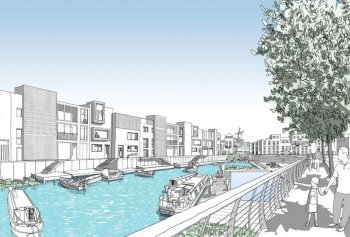
Innovative Housing
Innovative approach for housing development by fostering the evolution of active and sustainable communities.

- Consultancy
- Dataset
- Guidance
- Report
Leveraging Public Programmes with Socio-Economic and Development Objectives to Support Conservation and Restoration of Ecosystems
The Strategic Plan for Biodiversity 2011-2020 recognises that biodiversity underpins ecosystem functioning and the provision of ecosystem services that are essential for human well-being. The fourth Global Biodiversity Outlook underscores that biodiversity is still being lost and ecosystems
- Slides
Presentation on Reducing Disaster Risk through Restoration
This powerpoint slide provides a case study on a successful example of nature-based solution applied for disaster risk reduction: the Restoration of the Isar River in Germany. The initiative was implemented under the PHUSICOS project. More information on the case study is also available below.
- Document
Biomass accounting for Sustainable Forest Managment Plans using UAV data
Forest biomass and carbon are pivotal for multi-objective forest management, aiding in carbon sequestration and balance assessments.
- Document
- Training
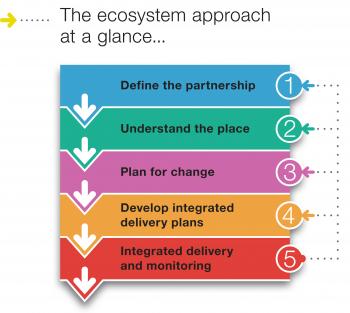
Ecosystem Approach Handbook
The Ecosystem Approach Handbook has been developed by Natural England and Countryscape to help landscape scale partnerships benefit from the ecosystem approach. It builds on partnership projects that Natural England has supported in Bassenthwaite and the South Pennines to help shape future
- Document
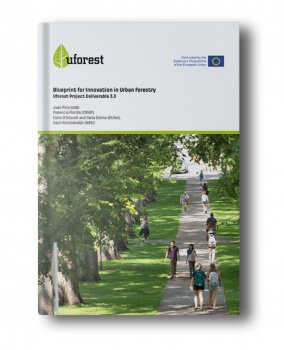
Blueprint for Innovation in Urban Forestry
Blueprint for Innovation in Urban Forestry: a review of urban forestry’s potential for a healthier and more sustainable future Urbanisation is a global trend: according to the United Nations Department of Economic and Social Affairs (UN DESA), today 55.5% of the world’s population lives in urban
- Report
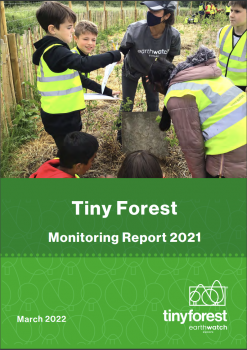
Tiny Forest: First monitoring report
Earthwatch Europe has published the first monitoring report for its Tiny Forest programme showcasing the first insights into the benefits to the environment and biodiversity that a Tiny Forest can provide in its early stages. The report highlights the vital role of the "super powerful
- Report
International principles and standards for the practice of ecological restoration
This summary provides an abbreviated outline and introduction to the full SER International Principles and Standards for the Practice of Ecological Restoration, Second Edition to: better understand how the principles and standards relate to each other; apply these concepts at all stages of a
- Document
- Guidance
- Training
PSS Toolkit
Workshop facilitation toolkit for the generation of business ideas/models linked to product service systems at the scale of urban agglomerations.
- Document
Specific silvicultural itineraries to optimize the production of quality timber and economic yield of Pinus pinaster.
Four silvicultural scenarios have been created considering the wood quality: - Standard scenario (M2): Involves three thinnings and a final felling. - Short rotation scenario with subsidies (M4): Includes one thinning and a final felling. - No management scenario (M8): Only comprises a final
- ‹ previous
- 5 of 45
- next ›