Marketplace
- Document
- Training
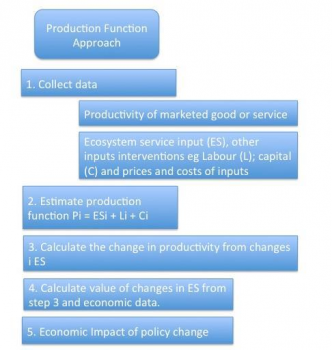
Method Factsheet - Production Function Approach
The production function approach (PFA) can be used in situations where a marketed good or service is produced with both man-made and ecosystem inputs. The PFA is a method designed to value indirect use values. It is highly appropriate for capturing ecological and monetary values, as well as
- Report
Nature-based solutions for microclimate regulation and air quality: Analysis of EU-funded projects
Nature-based Solutions (NbS) represent a key approach to improve air quality, microclimate, health and well-being of urban populations. The European Commission will adopt in 2021 a zero pollution action plan for air, water and soil and it is known that especially air quality has a tremendous effect

- Consultancy
- Event
- Software
- Training
Belgium Ecosystem Services Network BEES
The Belgium Ecosystem Services (BEES) network is a community of practice, which connects research, practice and policy on ecosystem services and related issues by fostering exchange and real-life networking events.

- Dataset
Ecosystem types of Europe
The dataset combines the Corine based MAES ecosystem classes with the non-spatial EUNIS habitat classification for a better biological characterization of ecosystems across Europe. As such it represents probabilities of EUNIS habitat presence for each MAES ecosystem type.

- Consultancy
Social media listening
Extensive methods of socio cultural valuation. Just taking profit of the fact that people explain a lot what do they like and do on social networks. Hashtags and geotags from Instagram, Twitter, and Facebbok can be great location based sources of information! Text analysis software can help to
- Empty
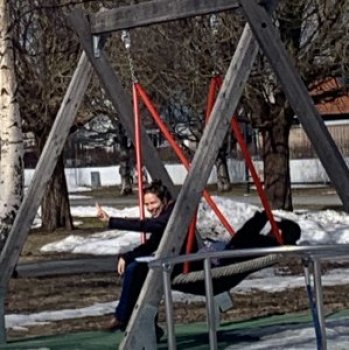
Seedbed Intervention: Umeå
The Cultivating City of Umeå carried out its seedbed intervention. Bölevägen is the name of the street that will be reconstructed over the next two years, along four green spaces that will be designed and developed. The seedbed intervention site, Aspgärdan, was an empty area close to an English
- Document
- Training
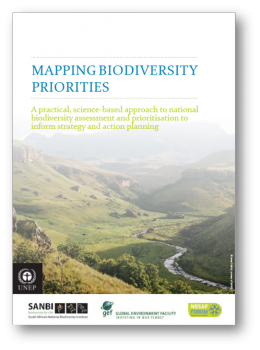
Mapping Biodiversity Priorities
This document sets out a practical, science-based approach to spatial biodiversity assessment and prioritisation, which can be applied at the national level in any country. It is especially useful for countries that are both biodiversity rich and resource constrained, where difficult choices have
- Document
- Training
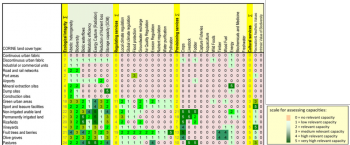
Method Factsheet - Simple Matrix Approach
Matrix Approaches are a quick and simple way to get an overall spatially-explicit picture of the ES in case study areas. The method is based on the idea of linking tabular spreadsheet data and spatial data together, i.e. joining external datasets to spatial units to create maps. The spreadsheet
- Guidance
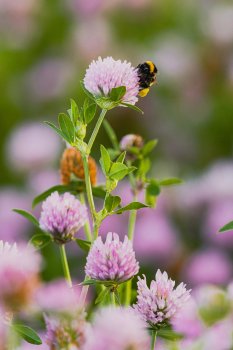
Guidance for monitoring pollinators in urban habitats
This guidance aims to bring tools and knowledge for cities to use pollinators as indicators of their urban greening and carry out pollinator monitoring. It builds on the EU Commission guidance for pollinator-friendly cities, and explores options for pollinator monitoring in more depth. It features
- Policy Brief
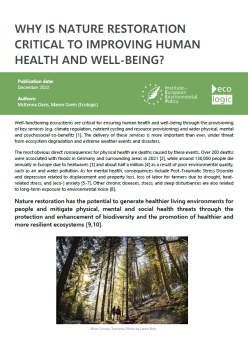
Why is Nature Restoration Critical to Improving Human Health and Well-being?
This policy brief highlights the importance of well-functioning ecosystems for ensuring human health and well-being, not least in light of climate change. Furthermore, it outlines the potential of nature restoration and specifically the law to generate healthier living environments and to mitigate
- Event
- Slides
- Video
ÁLTALÁNOS: TeAM HUb online Műhelytalálkozók szakmai anyagai
A TeAM HUb egy hiánypótló szakmai közösség, melynek célja a kormányzati, önkormányzati, szakmai és civil szereplők közötti párbeszéd és együttműködés ösztönzése a természetalapú megoldások széleskörű gyakorlati alkalmazása érdekében. E cél elérése érdekében 2023-ban online eseménysorozatot indult,
- Guidance
The EKLIPSE EU support mechanism
The goal of the EKLIPSE mechanism is to bring scientists, policy-makers and others together to ensure that decisions that affect the environment are made with the best available knowledge. This is a long-term goal, not one limited to the life of the four year EKLIPSE project. We therefore aim to
- Report
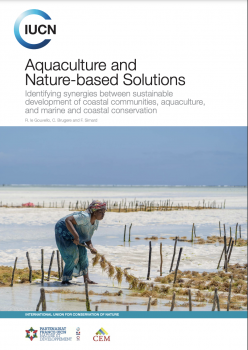
Aquaculture and Nature-based Solutions
The present report examines the emerging concept of Nature-based Solutions (NbS) and the IUCN Global Standard when applied to social-ecological systems that include aquaculture production. Aquaculture production has very significantly increased in tonnage and value over the last decades. It is seen
- Empty
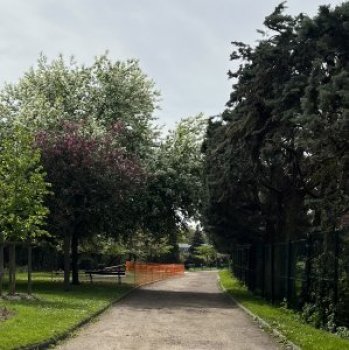
GoGreenRoutes City Factsheets Deliverable 8.3 Work Package 8
This report was developed as a part of the research project “GO GREEN: Resilient Optimal Natural, Technological and Environmental Solutions (GoGreenRoutes)”, funded by the European Commission’s Horizon 2020 programme. Publication Date: 31 Aug 2022 Author(s): Prof. Mark Nieuwenhuijsen (
- Document
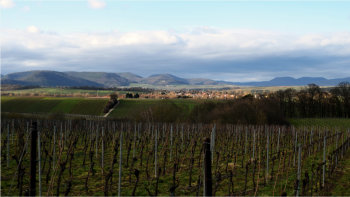
OPERAs Wine Exemplar Summary
Summarizes the work of the OPERAs Wine Exemplar, including researchers and stakeholders involved, tools used, and publications and outreach materials produced.
- Paper
Planning, designing and monitoring of nature-based solutions: guidelines to urban transformations
Contemporary urban planning faces multiple challenges that require innovative and holistic solutions. Rapid urbanisation, climate change, social inequalities and environmental degradation are some of the pressures facing cities. Urbanisation increases the demand for infrastructure and services,
- Document
- Event
- Product
- Report
People with Nature: Busting 24 Myths to Reverse Biodiversity Loss and Drive Transformative Change through Nature-based Solutions.
As climate change and biodiversity loss intensify, the persistence of certain myths can hinder the transformative change needed to build more sustainable societies. Preconceived ideas rooted in outdated practices or incomplete truths can slow down this change by hampering awareness and obstructing
- Consultancy
- Guidance
- Training
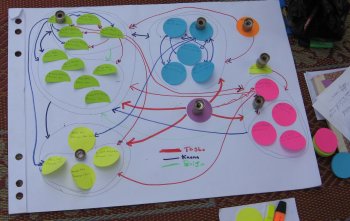
Participatory Network Analysis and Planning
CoKnow Consulting is offering facilitation and training to build capacity for inter- and transdisciplinary processes, by supporting you and your stakeholders to co-produce knowledge and co-design solutions for sustainability. One tool which has proven to be particularly helpful is the Net-Map tool
- Guidance
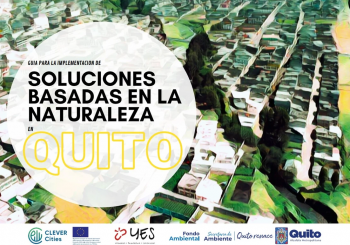
Guía para la Implementación de SbN en Quito
The application of NbS requires the involvement of a wide range of city agents: the policy makers, NGOs and residents They must be accompanied and involved along the way towards a greener city. We can not afford dispense with all existing local knowledge in our local communities. At the same time,
- Document
- Guidance
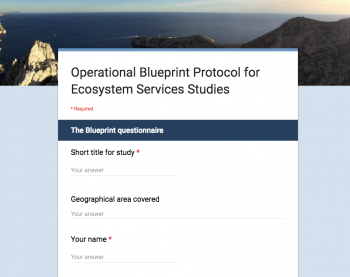
Study Design and Synthesis Protocol: The blueprint protocol
Welcome to the Blueprint protocol for ecosystem services studies. The aims of the protocol are twofold: - to act as a thinking tool, at the onset of projects, to help researchers design their studies - to synthesise complex research projects into a common framework. Hence, it is more than a
- ‹ previous
- 32 of 45
- next ›