Marketplace
- Guidance
Bridging Worlds Crafting Future-Ready NbS Curricula for Global Sustainability and Justice
This report addresses the current competency and skill gaps among Nature-based Solutions (NbS) professionals, by proposing a set of impactful experiential and inclusive curricula approaches to higher education and professional training providers in Europe and Latin America. It proposes a NbS
- Document
ESManage Project: Irish Freshwater Resources and Assessment of Ecosystem Services Provision
This thrid report from the ESManage Project gathers an extensive description of the current conditions of Ireland's Freshwater Resources and the identification of their associated Ecosystem Services.

- Video
GoGreenRoutes Introduction Video
Learn about GoGreenRoutes' core approaches and meet the project's partner cities in this short introduction video.
- Document
- Guidance
Addressing Climate Change in Cities – Catalogue of urban nature-based solutions
Nature-based solutions (NbS) are solutions that are inspired and supported by nature. They can be used in urban settings to complement or replace "traditional" or "grey" solutions to perform functions, such as thermal insulation and stormwater retention and filtration. Focusing
- Guidance
- Software
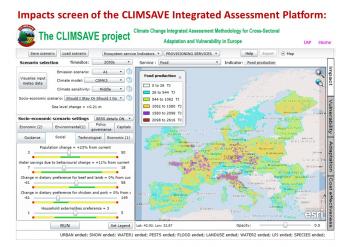
CLIMSAVE Integrated Assessment Platform
The CLIMSAVE Integrated Assessment Platform is a user-friendly, interactive web-based tool that allows stakeholders to assess climate change impacts and vulnerabilities for a range of sectors, including agriculture, forests, biodiversity, coasts, water resources and urban development. The linked
- Document
- Guidance
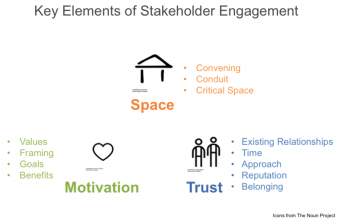
Creating Space, Aligning Motivations, and Building Trust: Key Elements of Stakeholder Engagement in 12 Ecosystem Services Case Studies
Using examples from all twelve of the OPERAs Exemplar case studies, this guidance document puts forth a stakeholder engagement framework comprising three key elements and their respective components, and demonstrates how awareness of key issues and a strategy for addressing them can help build

- Document
- Product
- Report
Delivering green infrastructure along linear assets. Scoping study-phase 1 (Executive Summary)
Delivering green infrastructure (GI) can provide multiple benefits that enhance the performance, efficiency and resilience of linear infrastructure assets and can reduce whole-life costs along transport, energy and water networks. C771 identifies good practice to support the integration of GI into

- Dataset
EPIC WebGIS Portugal
EPIC WebGIS is an interactive spatial data infrastructure, which provides georeferenced cartography at a national scale, using data visualization tools.
- Consultancy
- Software
- Training
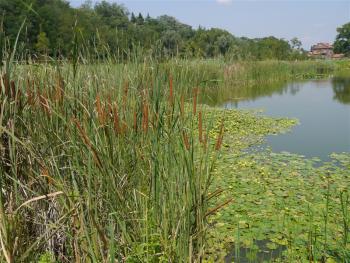
Sustainable Water Management - Treatment Wetlands Design
Nature-based solutions like constructed/treatment wetlands, can play an essential role for the water pollution control at urban scale and for reducing the flooding risk while providing positive effects on biodiversity, social acceptance and economics.
- Document
Defining and assessing success in mainstreaming
This background paper draws on reviews of the mainstreaming targets and indicators of selected NBSAPs from countries at different stages of their mainstreaming process, and the approaches to assessing the success of mainstreaming biodiversity and other issues into development. Recommendations are
- Event
- Image
- Report
- Video
- Web platform
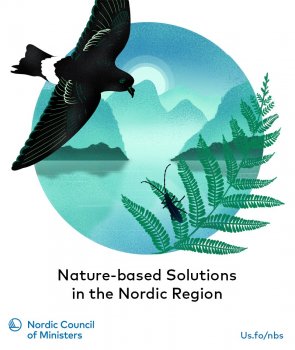
Nature-based Solutions in the Nordic Region
The NetworkNature Nordic hub is a gathering place for all those who work with nature-based solutions in the Nordic region. It is a platform where we exchange contacts and share the knowledge, we gain about implementing nature-based solutions in our part of the world. Also, we post Nordic cases on
- Document
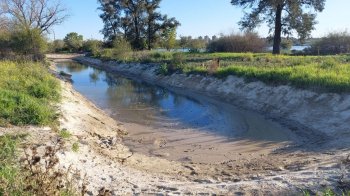
Conexus Life-Lab factsheet series - Wetland Lugano, the restoration of an aquatic ecosystem
The Lugano wetland pilot is restoring an aquatic ecosystem lost by urbanization in the south of Buenos Aires. The pilot is led by the city government. It involves key stakeholders to promote social awareness about the benefits that wetlands provide to the community. The enhancement of biodiversity
- Document
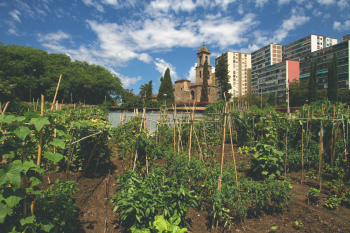
Conexus Life-Lab factsheet series - Urban Agriculture Observatory: Social and Ecosystem services
The Urban Agriculture Observatory is a partnership aiming to establish a database of environmental and social aspects of urban allotments and their benefits. Based on the database, a public web platform is created to share collected data and bring urban agriculture closer to citizens. It is
- Document
- Report
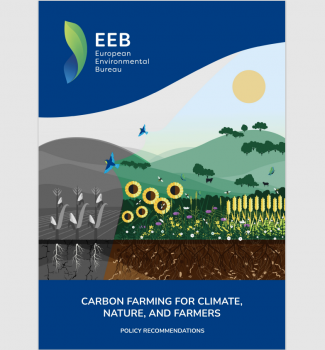
Carbon Farming for Climate, Nature, and Farmers report
The EU is promoting carbon farming as a new business model to deliver climate action in agriculture. To ensure the EU harnesses the full win-win-win potential of carbon farming, the EEB sets out the concrete solutions carbon farming should prioritise, and makes five key recommendations in this
- Document
Developing a Novel Martelloscope for Assessing Biodiversity and Growing Stock Volume with the aid of a Digital Twin.
Monitoring and quantifying biodiversity variation through silvicultural choices made with the marteloscope adds significant value to sustainable forest management, enhancing ecosystem services and production aspects.
- Paper
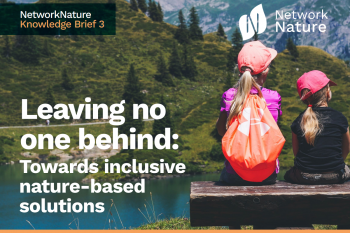
NetworkNature Knowledge Brief 3 - Leaving no one behind: Towards inclusive nature-based solutions
This Knowledge Brief produced by NetworkNature provides an overview of the concept of inclusion in the nature-based solutions context, including its relevance to the EU and international policy landscape and the just transition. By raising awareness on the importance of inclusive nature-based
- Empty
- Guidance
- Infographic
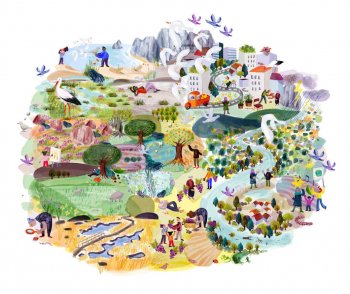
Nature-based Solutions Made Easy
About this guide: Have you heard about nature-based solutions and want to know more? Then read on as NetworkNature helps you understand what nature-based solutions (NbS) are. You will also be able to identify those solutions that claim to be NbS but are not. We will introduce you to quality
- Document
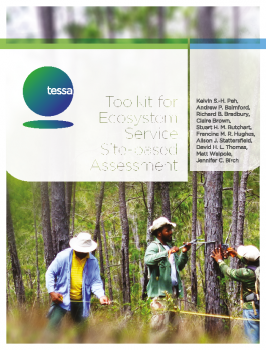
TESSA - Toolkit for Ecosystem Services Site-based Assessment
The TESSA toolkit provides practical guidance for measuring ecosystem services at the site scale.It effectively communicates the results to aid decision-making on a local level,which is an area existing tools have had limited applicability.TESSA provides scientifically robust information and a
- Document
Approaches to financing nature-based solutions in cities
Prepared in the framework of the Horizon 2020 project GrowGreen (http://growgreenproject.eu/), this working document presents an overview of financing approaches that can be used to deliver nature-based solutions (NbS) in urban areas. It includes a typology of financing mechanisms from the
- ‹ previous
- 3 of 45
- next ›