
- Document
- Document
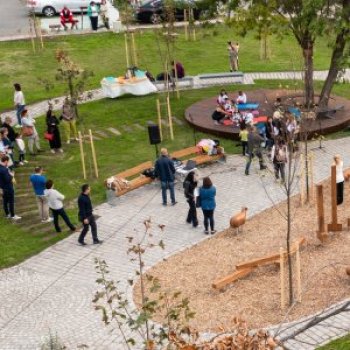
D6.3 Digital Placemaking tool-kit for all Cultivating Cities
In an era where technology and nature seemingly stand at opposite ends, digital placemaking offers a unique opportunity to bridge this gap, offering a harmonious blend that enhances human connection with urban nature environments through innovative digital interventions. Firstly, descriptions
- Report
European Roadmap to 2030 for Research and Innovation on Nature-based Solutions
This Roadmap to 2030, facilitated by NetworkNature, identifies core action areas for European research and innovation on Nature-based solutions (NbS) that are essential to achieve EU goals for NbS development and deployment. It offers a holistic view of the efforts made thus far, identifies
- Document
INTERLACE Modified urban design tools with NbS-related information
In the context of rapid urbanization and environmental degradation, the integration of nature-based solutions (NbS) into urban design has emerged as a pivotal strategy for fostering sustainable urban environments. This approach not only addresses ecological challenges but also enhances the quality
- Guidance
- Slides
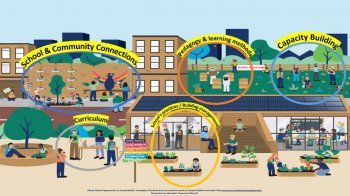
Schools as Innovation Hubs for the Green Transition: Transforming schools into NBS Living Labs
What does it mean for a school to be an innovation hub? These slides from NBS EduWORLD project can give you a better idea!
- Product
NBS EduWORLD Flipbook - Nature-based Solutions-Learning from NBS EduSystems inspiring initiatives
Nature-based solutions (NBS) have gained solid ground in urban planning and design over the last decade. However, NBS education is still in a nascent stage and thus there is a gap in knowledge, skills and awareness of younger generations to be prepared to support mainstreaming NBS in all sectors
- Document
Carbon accounting for PES
The economic aspect of sustainable forest management is crucial for preserving rural areas, highlighting the need to develop methods for quantifying its ecosystem services.

- Video
Forêt de Capet case study
Presentación del estudio de caso PHUSICOS : Forêt de Capet / Présentation de l'étude de cas PHUSICOS : Forêt de Capet
- Document
Climate Action through Regeneration: Unlocking the Power of Communities and Nature through Tourism
This white paper, “Climate Action through Regeneration: Unlocking the Power of Communities and Nature through Tourism” surveyed 30 tourism operators globally using the IUCN NbS Global Standard to assess how NbS are enabling destinations to take proactive climate action. The paper outlines 5
- Document
Decisional Support System to support the revision of forest management plans
OG FORTRACK utilized spatial methods to quantify carbon stock, biomass, and forest types, creating a Decision Support System that facilitates report generation and lowers costs for forest managers.
- Guidance
- Policy Brief
- Report
Can decentralised treatment systems address the challenges of wastewater management in the EU at the local level?
Decentralised wastewater treatment systems (DEWATS) and Nature-based Solutions (NbS) improve the resilience of wastewater treatment systems and support EU water policies. This brief provides case studies and recommendations to unlock the full potential of DEWATS across the current regulatory

- Report
NbS Policy Screening and Analysis of Needs and Gaps for 2024-2030
This report aims at providing an overview of the sustainability policy landscape as well as mapping policy needs and gaps in relation to the deployment of Nature-based Solutions (NbS) in the EU. The NetworkNature platform brings together the NbS community of innovators, practitioners and developers
- Document
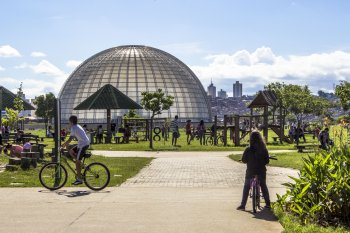
ASSESSMENT FRAMEWORK, INDICATORS AND PARTICIPATORY MONITORING PROCESS
This report presents the CONEXUS participatory assessment framework to maximize co-benefits and ensure local impact of urban nature-based solutions (NBS). The CONEXUS participatory assessment framework consists of: 1) A portfolio of indicators on NBS performance; 2) A comprehensive yet simple
- Empty
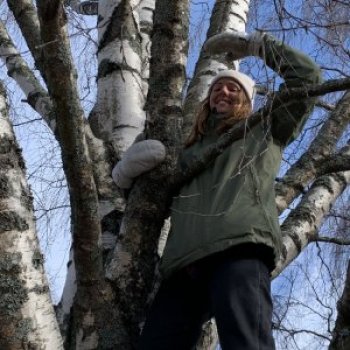
Natural environments, psychosocial health, and health behaviors in a crisis – A scoping review of the literature in the COVID-19 context
The COVID-19 outbreak led to major restrictions globally, affecting people’s psychosocial health and their health behaviors. Thus, the purpose of this scoping review was to summarize the available research regarding nature and health in the COVID-19 context. Overall, the findings indicate that

- Paper
The science, policy and practice of nature-based solutions: An interdisciplinary perspective
In this paper, they reflect on the implications for science, policy and practice of the recently introduced concept of Nature-Based Solutions (NbS), with a focus on the European context. First, they analyse NbS in relation to similar concepts, and reflect on its relationship to sustainability as an

- Document
- Guidance
- Product
Green Cities Framework (GCF) Handbook
Cities of all sizes and types can develop effective strategies for nature-based solutions, allowing them to create innovative and inspiring ways to tackle major urban challenges, such as flooding and heat stress. Embedding nature-based solutions in this way in long-term city planning, development
- Video
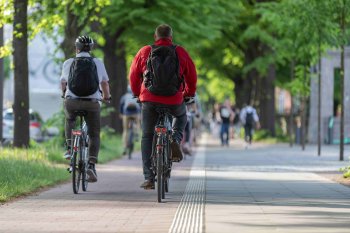
Science at ISGlobal
The 1000 cities ranking is a project of the Barcelona Institute for Global Health (ISGlobal), one of the centres in the PRBB. It’s aim is to estimate the impact of air quality, noise, temperature and proximity to green spaces on the health of people living in Europe's largest cities. Learn
- Dataset
- Web platform
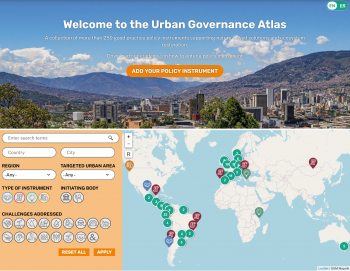
Urban Governance Atlas
The Urban Governance Atlas is an interactive online database of over 250 policy and governance instruments for urban ecosystem restoration and green space planning, including dedicated strategies and plans, planning instruments (targets, standards, scoring, green space factors), financial
- Report
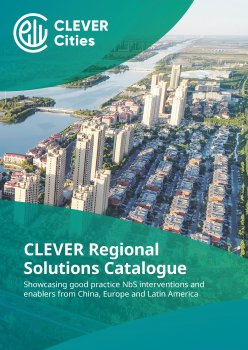
CLEVER Regional Solutions Catalogue
The CLEVER Regional Solutions Catalogue seeks to elevate the role of nature-based solutions (NbS) across the urban landscape. It aims to inspire uptake and continued energy for implementing Nature-based Solutions that meet the varied needs and requirements of modern cities.
- Document
- Guidance
- Report
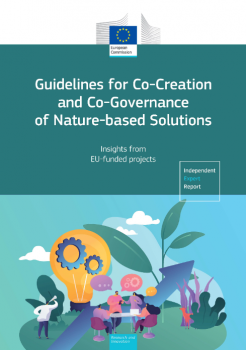
Guidelines for co-creation and co-governance of nature-based solutions
This report analyses co-creation and co-governance approaches for Nature Based Solutions (NbS). Each project represents different ways in co-designing, co-developing, co-implementing and co-monitoring NbS that are being deployed in diverse European contexts. The analysis presents best practices
- ‹ previous
- 19 of 20
- next ›