
- Document
Concept to Delivery Innovation Programme - Sustainable finance, business models and nature-based entrepreneurship strategies for Nature-based Solutions
Designing, delivering and managing nature-based solutions at a level that provides environmental, social and economic benefits while building resilience and benefitting biodiversity is complex. There are many issues to consider and many different stakeholders involved at all stages of the process.
- Document
GO SURF: decision support system for a participatory approach to forest management.
Decision Support Systems for Forestry (DSSF) are recognized as vital tools for implementing sustainable forest management and providing multiple ecosystem services.
- Document
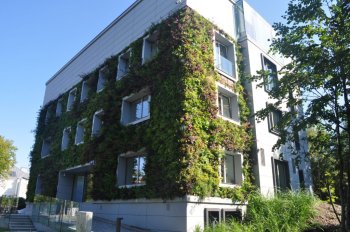
The uptake of new concepts in urban greening: Insights from Poland
The idea of nature having multiple benefits for urban management and planning is gaining prominence alongside the rise of climate change awareness. It is expressed through concepts such as nature-based solutions (NbS), ecosystem-based adaptation (EbA), and blue-green infrastructure (BGI). Despite
- Empty
Green space and mortality in European cities: a health impact assessment study / The Lancet Planetary Health
Natural outdoor environments including green spaces play an important role in preserving population health and wellbeing in cities, but the number of deaths that could be prevented by increasing green space in European cities is not known. This study aimed to estimate the number of natural-cause

- Paper
Peer-reviewed paper: Harnessing the potential of nature-based solutions for mitigating and adapting to climate change
Abstract: Although many governments, financial institutions, and corporations are embracing nature-based solutions as part of their sustainability and net-zero carbon strategies, some nations, Indigenous peoples, local community groups, and grassroots organizations have rejected this term. This
- Guidance
A practical guide to using reflexive monitoring for nature-based solutions
Reflexive monitoring is a method developed to monitor and evaluate transformative solutions. It is based on transition theory and helps you to navigate the complex and unpredictable nature of non-linear and multi- actor processes. It will prove very useful for the implementation of large-scale

- Empty
Report on Cultivating Cities' Challenge Workshops, Urban Morphology and SWOT analyses
The Challenge Workshop in each cultivating city was the first opportunity for different stakeholders to come together to get to know each other and to learn about GoGreenRoutes. During the Challenge Workshop, stakeholders were invited to create a vision for the upcoming seedbed and NBS

- Document
State of the art, good practices and NBS typology
This report presents a series of developments, trends and case studies that exemplify the growing importance that Nature-Based Solutions (NBS), as well as other closely related concepts, are having in thinking and practice around reconciling urban planning, human well- being and sustainability,
- Empty
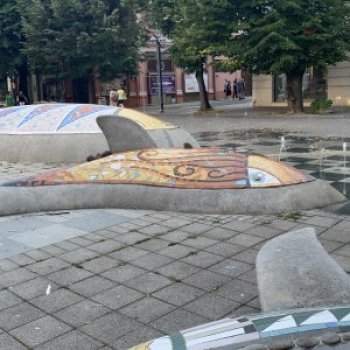
Seedbed Intervention:Burgas
Burgas organised its seedbed intervention in close proximity to one of the two pilot areas. The green area between “Gurko“ parking lot and Oborishte street is the pilot site for the GoGreenRoutes project in Burgas. It is located in an area of the city centre which is heavily built with large and
- Guidance
- Image
Manual de Soluciones basadas en la Naturaleza | Fomento de la biodiversidad en la Ciudad de Madrid (NbS guidelines for enhancing biodiversity in Madrid)
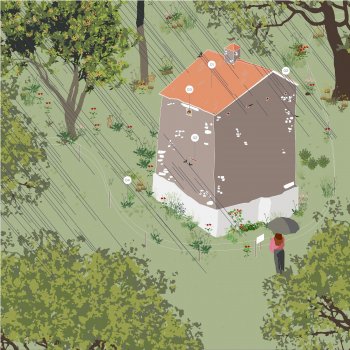
In the framework of the Madrid plan for Biodiversity enhancement and management, these visually striking guidelines for Nature-based solutions have been developed. Organised in 4 thematic blocks -green areas, urban streets, public buildings and vacant plots-, they aim to help public space managers
- Report
Mapping environmental risks and socio-economic benefits of planned transport infrastructure: a global picture
This technical report investigates the benefits of planned road and rail transport infrastructure projects for society and the economy, as well as the consequences for biodiversity and ecosystem services. To date, impacts of infrastructure development on ecosystem services have not been widely

- Paper
On the need for a multi-dimensional framework to measure accessibility to urban green
With the recent expansion of urban greening interventions, the definition of spatial indicators to measure the provision of urban greenery has become pivotal in informing the policy-design process. By analyzing the stability of the population and area rankings induced by several indicators of green
- Paper
Successful scaling of Edible City Solutions to promote food citizenship and sustainability in food system transitions
Sustainable, productive and biodiversity-friendly urban landscapes are a strategic step in transitioning to future-proof, liveable and healthy cities Edible nature-based solutions, otherwise known as “Edible City Solutions”, comprise a wide range of different forms of sustainable urban food
- Document
- Guidance
Conexus Deliverable 4.3: Ecosystem of guidelines and decision-support tools to stimulate NbS co-creation
The CONEXUS project has meticulously curated this Ecosystem of Guidelines to effectively disseminate the rich insights and practical knowledge gained through the comprehensive and action-oriented work on nature-based solutions across Latin America and Europe. This collection of guiding resources is

- Empty
Common Action Plan on clustering activities D1.3
This deliverable presents a summary of planned joint activities among the cluster of projects funded under the EU Horizon call H2020 SC5-14-2019 (Visionary and integrated solutions to improve well-being and health in cities).

- Empty
Terms of Reference for Urban Well-being Labs and associated local task forces in each of the cultivating cities
This ToR document refers to the intended development of Urban Well-Being Labs and the further establishment of a Local Task Force in each of the six participating cities. In the context of this ToR document, a focus is placed on the following key factors: • Listing of all definitions of

- Policy Brief
CONEXUS Policy Brief 8 -Localising the SDGs: The untapped potential of nature-based solutions in cities
This policy brief explores the potential of nature-based solutions (NbS) in cities to localise global sustainability goals and targets such as those enshrined in the 17 Sustainable Development Goals (SDGs). It presents the methodology used in CONEXUS to capture policy-relevant evidence on the
- Training
- Video
INTERLACE MOOC on Nature-based Solutions: (2) CITIZEN ENGAGEMENT as a tool to build local awareness and participation around NbS
Urban areas across the globe are facing unprecedented challenges—pollution, climate change, urban sprawl—and traditional solutions are falling short. The INTERLACE project’s Massive Open Online Course showcases how nature-based solutions offer a promising approach to help create resilient,
- Dataset
- Document
Database of good practice tools for the design and implementation of NbS, including factsheets for 10 tools
Ten approaches will be showcased on the Innovation Hub as short factsheets, highlighting their scope of application and examples of their EU and/or CELAC application.
- Consultancy
- Document
- Guidance
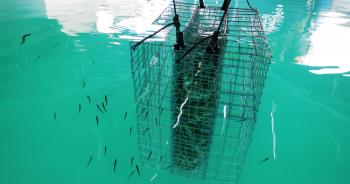
The Biohut
The Biohut is an artificial fish nursery meant to equip port infrastructures such as docks, pontoons or dikes. By providing food and shelter to the young fish, it restores the ecological nursery function that was lost when natural shallow coastal water were turned into urban environment. The
- ‹ previous
- 17 of 20
- next ›