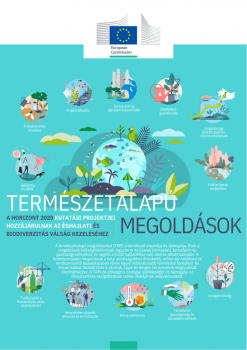
- Infographic
A Horizont 2020 kutatási projektjei TAM projektjei
A természetalapú megoldásokat (TAM) a természet inspirálja és támogatja. Ezek a megoldások költséghatékonyak, egyszerre nyújtanak környezeti, társadalmi és gazdasági előnyöket, és segítik a külső hatásokhoz való sikeres alkalmazkodás. A természetalapú megoldások a helyi adottságokhoz illeszkedő,

- Empty
Editorial Article on Human-Nature Interactions: Perspectives on Conceptual and Methodological Issues
Frontiers in Psychology editorial article. Publication Date: 19 Nov 2020 Author(s): Tadhg E. MacIntyre, Juergen Beckmann, Giovanna Calogiuri, Aoife A. Donnell, Marc V. Jones, Christopher R. Madan, Mike Rogerson, Noel E. Brick, Mark Nieuwenhuijsen and Christopher James Gidlow
- Document
Label Bas Carbone: a national forest carbon offsetting framework
Low carbon label (LBC) applied as the French standard for carbon offsetting projects but also to label the contribution of companies and communities to CO2 sequestration in the forest, as an ecosystem service benefiting the whole society
- Document
- Image
- Infographic
NetworkNature Visualisation: EU-Funded Nature-based solutions research projects addressing Societal Challenges across Ecosystems
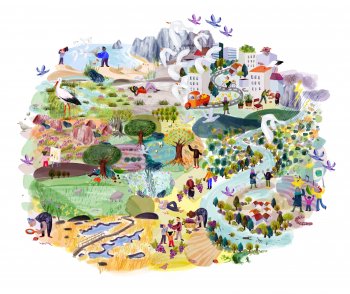
In this document you can find a visual representation of the different types of ecosystems and most relevant societal challenges in the context of NbS, with the aim to simplify and communicate these concepts, while inspiring NbS good practices. || The European Commission defines Nature-
- Document
NetworkNature & PHUSICOS Online Event Agenda: NbS private sector upscaling and capacity building
This is the agenda for the NetworkNature & PHUSICOS Online Event.
- Report
NetworkNature Annual Event Report 2023: Enabling transformation through and for Nature-based Solutions
The report summarises the key outcomes of the NetworkNature Annual Event 2023 “Enabling transformation through and for Nature-based Solutions”, which took place on 8th June 2023, at the Flagey Building in Brussels and brought together more than 150 participants to discuss the transformative nature

- Training
Nature-based solutions for creating circular cities Course
This course provides knowledge on how to create such cities by using nature-based solutions (nbs). It comprises knowledge on resources flows and management of these flows in cities, appropriate nature- based solutions for managing resources, implementation aspects and number of worked examples to

- Document
The social-ecological system in the study of Poznań’s integrated geography
The article presents the contribution of the Department of Integrated Geography of the Adam Mickiewicz University in the development of methodological framework and practical applications within the concept of the social-ecological system. The ongoing work focuses on several research fields. They

- Document
- Report
Report on NBS professional Skill Gaps
This report identifies nature-based solutions (NBS) professional skill gaps in order to give guidance on how Nature-based Thinking (NBT) can be better integrated into higher education and professional training. To identify the skill gaps, two different approaches for data collection were deployed
- Video
Business insight programme – webinars
As part of the CITIES TALK NATURE events, the INTERLACE project held a series of webinars to discuss business insights and opportunities for nature-based solutions (NbS) in Europe and Latin America. The webinars covered topics including: policy instruments for private NbS businesses, standards and
- Document
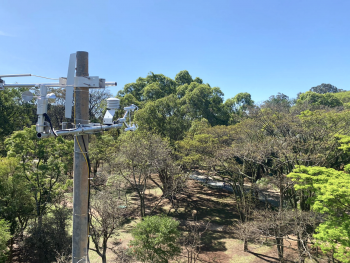
Conexus key learning factsheet series - Implementation of indicators for Nature-based Solutions: How to organize it?
Indicators were implemented in each CONEXUS Life-Lab through a participatory approach to gather evidence of the multiple benefits of Nature-based Solutions (NbS) within unique local contexts. The process of implementation was closely followed to track progress and to collect experiences. The key
- Empty
Co-Creation in the making: Introducing and Co-Planning seedbed interventions
This report provides an overview of the work of WP3 partners, city partners and their stakeholders since the challenge workshops4 were implemented in each of the six Cultivating Cities in October and November 2021 and January 2022. This report also introduces the concept of seedbed interventions by
- Document
- Event
- Report
NetworkNature Annual Event 2024 Report | Busting myths: People with nature
This year’s NetworkNature Annual Conference – "Busting myths: People with nature" took place on 25th September 2024, both online and in-person in Brussels, in Belgium. It gathered more than 370 participants, including policymakers, local authorities, researchers, land planners and

- Guidance
- Image
- Infographic
Climate change in 12 pictures
This colourful and illustrative brochure was developed within the IUCN's initiative ADAPT: Nature-based Solutions (NbS) for resilient communities in Western Balkans. It represents a short guide through the climate change consequences showcasing possible solutions to climate change adaptation
- Document
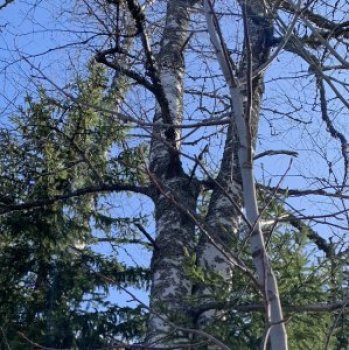
Vigil'encre: Participatory science tool for epidemiological surveillance of chestnut ink
An app to diagnoze and report suspected cases with precise information and geolocation data for epidemiological surveillance of Phytophthora, helping in understanding disease distribution and its interactions with drought
- Document
- Report
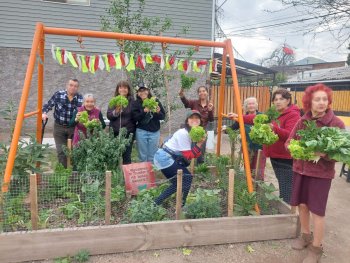
Conexus Life-Lab Factsheet Series: Co-producing NbS in the “Remodelación Panamericana Norte”
The regeneration of the “Remodelación Panamericana Norte” neighborhood, facilitated by the program “Quiero Mi Barrio,” enabled the improvement of the neighborhood by bringing in Nature-based Solutions (NbS). The accompanying five-step collaborative process supported improving social security and
- Guidance
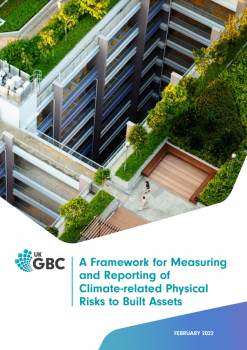
A Framework for Measuring and Reporting of Climate-related Physical Risks to Built Assets
In August 2021, UKGBC launched the Measuring and Reporting Climate-related Physical Risks task group in response to the upcoming mandatory disclosure of climate-related risks. For large organisations and financial institutions within the UK, this comes into force from April 2022 in line with the
- Video
MEZŐGAZDASÁG: Talaj = Élet
Az intenzív gazdálkodás miatt a világ termőtalajainak jelentős hányada leromlott állapotban van vagy már véglegesen meg is semmisült. Ennek oka a talajok szervesanyag-tartalmának csökkenése, az ebből következő szerkezetromlás, tömörödés és az erózió, illetve a savanyodás, a szikesedés vagy éppen a

- Document
- Guidance
ÁLTALÁNOS: Természetalapú Megoldások: Lehetőség a változtatásra - esély a változásra
Az információs füzet közérthetően mutatja be a TAM fogalmát, a kapcsolódó elméleti és szakpolitikai hátteret, emellett jó példákon, bevált gyakorlatokon keresztül inspirációt is nyújt a TAM alkalmazásához. A kiadványt a Külgazdasági és Külügyminisztérium megbízásából az Interreg V-A Románia-
- Document
Cookbook on virtual and physical interactive exchange formats for cities (EN/ES)
Lessons learned from the city pairings process (T4.2) will be collected and published by CA and UNGL in a cookbook format to support further effective exchanges between INTERLACE cities, as well as beyond the project.
- ‹ previous
- 14 of 20
- next ›